

Seven seas 1400
€550.00
F-ONE SEVEN SEAS 1400 – Excellent Condition | Professionally Inspected & Ready to Use
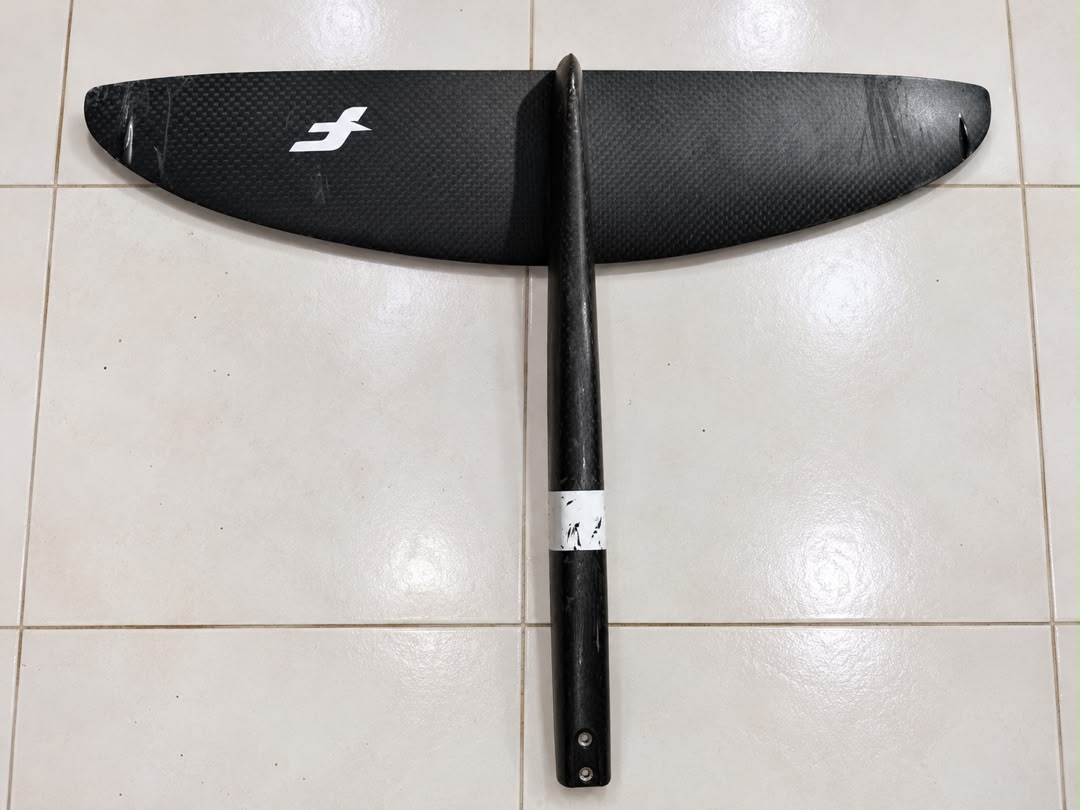
The F-ONE SEVEN SEAS 1400 Carbon Hydrofoil Front Wing is presented in excellent condition, carefully maintained, and ready for another exciting hydrofoil adventure. A professional inspection is reported to have been completed, with no cracks, tears, structural damage, or previous repairs identified.
Furthermore, the premium carbon construction is described as well preserved, with no reported delamination, modifications, or excessive wear.
Components and Condition Details
- 1400 cm² Carbon Front Wing: Excellent condition with no reported damage.
- Leading Edge: Smooth and free from reported cracks or chips.
- Trailing Edge: Clean, with no reported damage.
- Carbon Wingtips: Well maintained and structurally sound.
- Upper Carbon Surface: No reported cracks or delamination.
- Lower Carbon Surface: Clean and well preserved.
- TITAN 2 Connection Interface: Reportedly inspected and fully functional.
- Mounting Points: No reported damage or excessive wear.
- Mounting Screws: Included if confirmed.
- Protective Wing Cover: Included where available.
- Compatible Mast, Fuselage, and Stabilizer: Included only if specified in the package.
No previous repairs, tears, cracks, or structural modifications have been reported.
Professionally inspected, well maintained, and ready to use, ride, foil, and jump again, subject to final safety checks and manufacturer-approved use.
Excellent condition, premium carbon engineering, and exceptional hydrofoil performance!
Description
F-ONE SEVEN SEAS 1400 – Premium Carbon Hydrofoil Front Wing for Downwind Foiling, Wing Foiling, and Exceptional Glide
F-ONE SEVEN SEAS 1400 – Exceptional Hydrofoil Performance, Early Lift, and Advanced Gliding Efficiency
The F-ONE SEVEN SEAS 1400 has been engineered to deliver an exceptional combination of early lift generation, outstanding hydrodynamic efficiency, responsive maneuverability, and sustained gliding performance
Through premium carbon construction, advanced Dynamic Structural Design technology, and the innovative TITAN 2 connection system, a sophisticated hydrofoiling experience has been created for riders seeking comfortable, efficient, and versatile performance.
Furthermore, the generous 1400 cm² lifting surface has been designed to provide effective low-speed support while maintaining smooth acceleration. Consequently, controlled takeoffs, enjoyable cruising, and extended gliding sessions can be supported when appropriate equipment and riding conditions are selected.
Unlike smaller performance hydrofoil wings that require higher takeoff speeds, the SEVEN SEAS 1400 has been developed to provide accessible lift and a broad usable speed range.
Additionally, the refined 8.0 aspect ratio has been incorporated to balance glide efficiency with practical turning characteristics.
Through its extended 105.5 cm wingspan, efficient lift distribution and sustained forward movement have been prioritized.
Whether recreational wing foiling, downwind riding, parawinging, or technical freeride progression is preferred, an impressive range of riding opportunities can be explored.
Advanced 1400 cm² Surface Area for Early Lift
A carefully optimized lifting surface has been incorporated to support effective takeoffs at suitable lower speeds.
Through the refined hydrodynamic profile, useful lift can be generated without requiring excessive acceleration.
Furthermore, consistent foil engagement has been emphasized.
Consequently, riders transitioning toward more efficient hydrofoil equipment may appreciate the accessible lifting characteristics.
Optimized 8.0 Aspect Ratio for Exceptional Glide
An advanced aspect ratio of 8.0 has been incorporated into the front-wing geometry.
Through the elongated design, induced drag can be reduced compared with lower-aspect alternatives under equivalent conditions.
Additionally, useful maneuverability has been preserved.
As a result, an enjoyable balance between efficient gliding and responsive turning has been established.
Advanced Carbon Fiber Construction – Lightweight Strength and Responsive Handling
Premium Carbon Composite Engineering
High-performance carbon materials have been incorporated into the SEVEN SEAS 1400 to provide dependable structural stiffness and efficient load transfer.
Through carefully controlled composite manufacturing, precise foil shaping has been prioritized.
Furthermore, unwanted structural deformation can be minimized during intended riding conditions.
Consequently, responsive handling and predictable hydrofoil feedback can be supported.
Dynamic Structural Design Technology
F-ONE’s Dynamic Structural Design has been developed to optimize carbon reinforcement according to the loads experienced by the front wing.
Through strategically selected fiber placement, bending and torsional behavior can be managed.
Additionally, structural responsiveness can be improved.
As a result, accurate steering and consistent handling have been emphasized.
Weight-Efficient Performance
A published front-wing weight of approximately 1.75 kg has been achieved for the SEVEN SEAS 1400 TITAN 2 configuration.
Through advanced composite engineering, structural rigidity and practical handling have been balanced.
Furthermore, the material arrangement supports efficient load distribution.
Consequently, dependable performance and modern carbon construction have been combined.
TITAN 2 Connection – Advanced Hydrofoil Assembly Technology
Precision-Engineered Connection System
The F-ONE TITAN 2 connection has been developed to improve structural efficiency between compatible hydrofoil components.
Through the revised attachment geometry, dependable alignment has been prioritized.
Furthermore, unnecessary connection movement can be reduced.
Consequently, more direct rider feedback and responsive foil control can be supported.
Two-Screw Mounting Arrangement
A practical connection architecture utilizing two M8 screws has been incorporated.
Through this design, secure attachment can be achieved when manufacturer-approved hardware and procedures are followed.
Additionally, equipment assembly can be simplified.
As a result, convenient preparation and dependable component engagement have been emphasized.
Improved Structural Responsiveness
During pumping, carving, and acceleration, substantial forces are transferred through the hydrofoil assembly.
Through the rigid TITAN 2 connection, unwanted movement can be minimized.
Furthermore, efficient transmission of rider inputs can be supported.
Consequently, controlled hydrofoil movement can be encouraged.
The TITAN 2 connection must be paired with compatible F-ONE components. Older TITAN connection parts should not automatically be considered interchangeable.
F-ONE SEVEN SEAS 1400 – Premium Features and Performance Highlights
The following advanced characteristics have been incorporated into this premium carbon front wing:
- 1400 cm² Surface Area: Early lift generation and controlled low-speed performance have been prioritized.
- 105.5 cm Wingspan: Efficient lift distribution and sustained glide have been emphasized.
- 8.0 Aspect Ratio: Hydrodynamic efficiency and practical maneuverability have been balanced.
- 1.75 kg Published Weight: Performance-oriented carbon construction has been incorporated.
- Premium Carbon Composite: Structural stiffness and responsive handling have been prioritized.
- Dynamic Structural Design: Optimized carbon reinforcement has been developed.
- TITAN 2 Connection: Efficient load transfer and secure assembly have been supported.
- Two M8 Mounting Screws: Convenient component attachment has been incorporated.
- Early Takeoff Capability: Controlled foil engagement at suitable lower speeds has been emphasized.
- Broad Usable Speed Range: Versatile riding characteristics have been developed.
- Exceptional Glide Efficiency: Forward momentum preservation has been prioritized.
- Responsive Carving: Smooth directional changes have been supported.
- Low-Speed Lift: Accessible hydrofoil performance has been emphasized.
- Downwind Foiling Capability: Efficient swell connections can be encouraged.
- Wing-Foiling Versatility: Freeride and progression-oriented applications have been accommodated.
- Parawing Compatibility: Efficient glide and controlled maneuverability can be supported.
- Pumping Potential: Sustained forward movement can be encouraged.
- Premium F-ONE Engineering: Advanced carbon materials and refined hydrodynamic technology have been combined.
Downwind Foiling – Exceptional Glide and Ocean-Swell Connections
Efficient Downwind Performance
For downwind enthusiasts, the ability to preserve momentum between ocean swells becomes especially valuable.
Through the SEVEN SEAS 1400’s efficient wing profile, unnecessary hydrodynamic resistance can be reduced.
Furthermore, the generous lifting area provides useful support at lower riding speeds.
Consequently, smoother transitions between suitable ocean bumps can be encouraged.
Connecting Multiple Swells
During downwind riding, accurate positioning and momentum management influence overall performance.
Through the 8.0 aspect ratio, efficient gliding has been prioritized.
Additionally, controlled turning can support directional adjustments between wave sections.
As a result, extended downwind riding opportunities may be achieved.
Accessible Downwind Progression
The SEVEN SEAS range has been developed with accessible performance in mind.
Through predictable lifting characteristics, progression toward downwind riding can be supported.
Furthermore, the 1400 cm² front wing offers a substantial lifting platform.
However, rider weight, experience, paddling ability, and environmental conditions remain important.
Wing Foiling – Early Takeoffs and Comfortable Freeride Performance
Smooth Hydrofoil Engagement
During wing foiling, sufficient board speed must be established before sustained lift can be generated.
Through the 1400 cm² surface area, useful lift can be produced at suitable lower speeds.
Furthermore, the refined profile supports efficient acceleration.
Consequently, controlled takeoffs and enjoyable progression can be encouraged.
Comfortable Cruising
For recreational wing foiling, predictable handling and efficient forward movement are especially valuable.
Through the advanced carbon structure, direct rider feedback can be provided.
Additionally, suitable stabilizer selection can contribute to controlled pitch behavior.
As a result, comfortable cruising can be experienced.
Responsive Turning
During gybes, tacks, and freeride carving, accurate directional control becomes important.
Through the refined wingtips and balanced aspect ratio, manageable roll response has been prioritized.
Furthermore, the rigid carbon construction supports direct steering.
Consequently, smooth directional transitions can be achieved.
Parawinging – Efficient Glide and Versatile Control
Smooth Powered-to-Gliding Transitions
During parawinging, periods of reduced wind propulsion may be encountered.
Through the SEVEN SEAS 1400’s efficient hydrodynamic profile, forward momentum can be preserved.
Furthermore, strong low-speed lift can support continued foil engagement.
Consequently, smooth transitions between powered movement and wave-driven gliding may be achieved.
Responsive Directional Adjustments
For parawing riders, controlled maneuverability becomes particularly valuable.
Through the front wing’s balanced geometry, suitable turning characteristics can be maintained.
Additionally, the TITAN 2 connection supports direct rider feedback.
As a result, precise directional movement can be encouraged.
Pump Foiling – Efficient Momentum and Energy Transfer
Sustained Glide Between Pumping Movements
During hydrofoil pumping, repeated rider movements are used to maintain forward speed.
Through the 8.0 aspect ratio, unnecessary induced drag can be reduced.
Furthermore, the generous 1400 cm² area can support lifting performance at lower speeds.
Consequently, sustained movement can be encouraged through appropriate technique.
Efficient Structural Response
During pumping, forces are transmitted through the mast and front wing.
Through the carbon construction and secure TITAN 2 connection, unwanted flex and mechanical movement can be minimized.
Additionally, efficient rider feedback can be maintained.
As a result, controlled pumping sequences can be supported.
F-ONE SEVEN SEAS 1400 – Technical Specifications
| Specification | Details |
|---|---|
| Manufacturer | F-ONE |
| Product Name | SEVEN SEAS 1400 |
| Product Category | Carbon Hydrofoil Front Wing |
| Model Version | Newer TITAN 2 |
| Surface Area | 1400 cm² |
| Wingspan | 105.5 cm |
| Aspect Ratio | 8.0 |
| Published Weight | 1.75 kg |
| Construction | Carbon Composite |
| Structural Technology | Dynamic Structural Design |
| Connection System | F-ONE TITAN 2 |
| Principal Mounting Hardware | Two M8 Screws |
| Main Applications | Downwind, Freeride Wing Foiling |
| Additional Applications | Parawinging, Pumping |
| Performance Focus | Early Lift, Glide, Stability, Versatility |
| Product Reference | 77267-0824 |
Compatible Hydrofoil Equipment and Recommended Accessories
Compatible F-ONE TITAN 2 Mast
A suitable TITAN 2-compatible mast should be selected for secure equipment integration.
Furthermore, mast length and construction should be matched to the intended riding discipline.
Through correct component selection, dependable assembly and responsive handling can be supported.
Compatible Rear Stabilizer
An appropriate F-ONE stabilizer should be selected according to the manufacturer’s recommendations.
Through suitable tail geometry, pitch stability and turning response can be adjusted.
Additionally, overall drag characteristics can be influenced.
Consequently, equipment configuration should be matched to rider experience and intended performance.
Recommended Hydrofoil Accessories
- Compatible TITAN 2 Mast: Secure structural integration can be supported.
- Manufacturer-Approved Stabilizer: Appropriate pitch control can be established.
- Compatible Tail Assembly: Correct component alignment can be maintained.
- Manufacturer-Approved M8 Screws: Dependable installation can be supported.
- Suitable Hydrofoil Board: Correct mounting compatibility should be verified.
- Protective Front-Wing Cover: Transportation damage can be reduced.
- Hydrofoil Travel Bag: Practical equipment organization can be encouraged.
- Protective Helmet: Impact protection should be prioritized.
- Impact Vest: Additional protective equipment can be provided.
The front wing should not be advertised as a complete hydrofoil kit unless all additional components are actually supplied.
Carbon Durability and Long-Term Hydrofoil Maintenance
Leading-Edge Inspection
Before every session, the front wing should be examined for cracks, chips, impact damage, and delamination.
Furthermore, the leading edge should be checked carefully.
Through regular inspection, structural concerns can be identified before use.
Trailing-Edge and Wingtip Protection
The trailing edge and wingtips should be protected against unnecessary impacts.
Additionally, unusual surface damage should be professionally assessed.
Consequently, potentially compromised equipment can be identified.
TITAN 2 Connection Maintenance
The mounting interface should be kept clean and inspected regularly.
Furthermore, appropriate mounting hardware should be installed according to F-ONE’s instructions.
Through correct assembly, secure component engagement can be maintained.
Saltwater Cleaning
After saltwater sessions, accumulated sand and salt should be removed according to manufacturer recommendations.
Additionally, metallic hardware should be inspected for corrosion.
Consequently, unnecessary deterioration can be minimized.
Safe Storage and Transportation
A protective cover should be used whenever practical.
Furthermore, excessive pressure and direct impacts against the carbon structure should be avoided.
Through responsible equipment care, long-term condition can be preserved.
Why Choose the F-ONE SEVEN SEAS 1400?
Exceptional Early Lift
A generous 1400 cm² lifting surface has been incorporated to provide effective lower-speed support.
Through the refined hydrodynamic profile, controlled foil engagement has been prioritized.
Furthermore, efficient acceleration can be encouraged.
Outstanding Glide Efficiency
An 8.0 aspect ratio has been selected to support sustained forward movement.
Through reduced induced drag, efficient gliding can be achieved under suitable conditions.
Additionally, comfortable cruising and downwind transitions can be supported.
Premium Carbon Engineering
Advanced composite construction and Dynamic Structural Design have been incorporated.
Through optimized reinforcement, structural stiffness and direct steering response have been emphasized.
Furthermore, the TITAN 2 connection supports dependable load transfer.
Versatile Riding Performance
Downwind foiling, recreational wing foiling, parawinging, and pumping applications have been accommodated.
Through appropriate equipment selection, the front wing can be matched to different riding preferences.
Consequently, a versatile hydrofoil platform has been created.
Experience Premium Hydrofoil Performance With the F-ONE SEVEN SEAS 1400
The F-ONE SEVEN SEAS 1400 has been developed to combine advanced carbon construction, early lift generation, impressive hydrodynamic efficiency, and smooth handling.
Through its 1400 cm² lifting surface and 105.5 cm wingspan, a practical balance between flotation-like low-speed lift and efficient forward movement has been achieved.
Furthermore, the advanced 8.0 aspect ratio supports sustained glide and enjoyable maneuverability.
From comfortable wing-foiling sessions and downwind adventures to efficient parawing riding and hydrofoil progression, exciting performance possibilities can be explored.
Choose the F-ONE SEVEN SEAS 1400 for premium carbon engineering, exceptional glide efficiency, early takeoffs, responsive handling, and advanced TITAN 2 hydrofoil technology.
SEO Meta Description
Discover the F-ONE SEVEN SEAS 1400 carbon front wing, featuring TITAN 2 technology, early lift, exceptional glide, responsive carving, and downwind performance.
Advanced Hydrofoil Performance, Exceptional Glide, Carbon Engineering, and Versatile Riding Applications
F-ONE SEVEN SEAS 1400 – Experience the Next Level of Hydrofoil Efficiency
The F-ONE SEVEN SEAS 1400 Carbon Front Wing has been developed to offer an impressive balance of early lift, sustained gliding performance, responsive handling, and dependable carbon construction.
Through advanced hydrodynamic engineering, a streamlined profile, and an optimized aspect ratio, efficient movement through the water has been prioritized.
Furthermore, improved low-speed support has been combined with a broad usable speed range. Consequently, smooth cruising, downwind progression, and versatile freeride performance can be enjoyed under suitable conditions.
For riders seeking improved glide without sacrificing practical maneuverability, a carefully balanced hydrofoil platform has been created.
Additionally, the newer TITAN 2 connection has been incorporated to support secure assembly and direct load transfer.
Whether longer downwind runs, recreational wing-foiling sessions, parawinging, or controlled pumping practice is preferred, versatile performance opportunities can be explored.
Optimized Hydrodynamics for Efficient Riding
A refined carbon front-wing profile has been engineered to provide effective lift while managing resistance.
Through carefully shaped lifting surfaces, efficient water movement can be encouraged.
Furthermore, unwanted drag can be reduced during sustained flight.
As a result, smoother acceleration and more efficient gliding can be supported.
Balanced Lift and Maneuverability
The generous 1400 cm² surface area has been combined with an aspect ratio of 8.0.
Through this arrangement, useful lower-speed lift and efficient forward movement have been prioritized.
Additionally, practical turning characteristics have been preserved.
Consequently, versatile riding performance can be achieved without relying exclusively on high-speed operation.
Advanced Hydrofoil Geometry – Why the SEVEN SEAS 1400 Delivers Impressive Glide
1400 cm² Lifting Surface
An extensive 1400 cm² surface area has been incorporated into the front wing.
Through this generous lifting platform, effective hydrofoil engagement can be encouraged at suitable lower speeds.
Furthermore, appropriate rider weight and foil selection can contribute to predictable takeoff behavior.
Consequently, smooth progression and accessible riding performance can be supported.
During downwind sessions, low-speed lift can become especially valuable when speed decreases between swells.
Through the front wing’s hydrodynamic profile, continued flight can be supported when sufficient forward momentum is maintained.
105.5 cm Wingspan
A published wingspan of 105.5 cm has been incorporated into the newer TITAN 2 configuration.
Through the elongated planform, efficient lift distribution has been prioritized.
Furthermore, induced drag can be reduced compared with less efficient planforms under comparable conditions.
As a result, sustained gliding and controlled acceleration can be encouraged.
8.0 Aspect Ratio
An aspect ratio of 8.0 has been selected to balance glide efficiency with responsive maneuverability.
Through this design, unnecessary energy loss during forward movement can be reduced.
Additionally, turning performance has been maintained as an important part of the wing’s character.
Consequently, recreational freeride and more technical downwind applications can be supported.
Premium Carbon Composite Construction – Engineered for Strength and Responsiveness
Precision Carbon Manufacturing
Advanced carbon composite materials have been incorporated into the front wing’s structural design.
Through carefully controlled reinforcement placement, stiffness and dependable response have been prioritized.
Furthermore, accurate hydrodynamic shaping can be maintained.
As a result, predictable handling can be supported during intended riding conditions.
Dynamic Structural Design
F-ONE’s Dynamic Structural Design approach has been used to manage the distribution of carbon reinforcement.
Through load-specific structural engineering, unnecessary deformation can be minimized.
Additionally, suitable bending and torsional characteristics can be achieved.
Consequently, effective energy transfer and responsive turning can be encouraged.
Direct Rider Feedback
During hydrofoil riding, subtle pressure changes are transmitted through the board, mast, and front wing.
Through the rigid composite structure, those inputs can be transferred with reduced unwanted movement.
Furthermore, the connection between rider technique and hydrofoil response can be made more predictable.
As a result, controlled maneuvering can be supported.
TITAN 2 Connection System – Secure Integration and Efficient Load Transfer
Refined Component Connection
The newer TITAN 2 mounting system has been designed for compatible F-ONE hydrofoil equipment.
Through a carefully developed connection interface, structural engagement has been prioritized.
Furthermore, dependable alignment can be supported when the correct components are installed.
Consequently, consistent assembly and direct foil response can be encouraged.
Two-Screw Installation
A two-M8-screw connection arrangement has been incorporated into the TITAN 2 design.
Through this configuration, convenient component installation can be achieved.
Additionally, the correct tightening procedure can help maintain secure attachment.
However, screw specifications and tightening requirements should always be checked against the manufacturer’s instructions.
Important Compatibility Considerations
TITAN 2 components should be matched with the manufacturer’s approved equipment.
Older TITAN-generation parts must not be assumed to fit.
Furthermore, any adapters or alternative assemblies should be verified before use.
Consequently, unsuitable component combinations can be avoided.
F-ONE SEVEN SEAS 1400 – Outstanding Features and Performance Benefits
The following characteristics have been incorporated into this premium hydrofoil front wing:
- 1400 cm² Surface Area: Early lift and practical low-speed performance have been prioritized.
- 105.5 cm Wingspan: Efficient lift distribution and sustained glide have been supported.
- 8.0 Aspect Ratio: Hydrodynamic efficiency and useful maneuverability have been balanced.
- Carbon Composite Construction: Structural stiffness and dependable responsiveness have been emphasized.
- Dynamic Structural Design: Optimized reinforcement placement has been incorporated.
- TITAN 2 Connection: Direct load transfer and secure equipment integration have been prioritized.
- Two M8 Mounting Screws: Practical assembly has been supported.
- Smooth Takeoff Characteristics: Controlled hydrofoil engagement can be encouraged.
- Efficient Forward Glide: Momentum preservation has been emphasized.
- Responsive Carving: Smooth directional transitions can be supported.
- Downwind Performance: Ocean-swell connections can be explored.
- Wing-Foiling Versatility: Recreational cruising and technical progression have been accommodated.
- Parawinging Applications: Efficient transitions between powered and unpowered movement can be supported.
- Pumping Potential: Forward momentum can be maintained through suitable technique.
- Advanced Carbon Engineering: Performance-oriented structural design has been prioritized.
- Premium F-ONE Technology: Refined hydrodynamics and modern composite construction have been combined.
Downwind SUP Foiling – Efficient Ocean-Swell Connections
Smooth Takeoff Development
During downwind SUP foiling, sufficient paddling speed must be achieved before sustained hydrofoil lift can be established.
Through the generous 1400 cm² area, useful low-speed lifting performance can be provided.
Furthermore, the refined foil profile supports efficient acceleration.
Consequently, controlled takeoffs may be encouraged when the rider, board, and conditions are appropriately matched.
Maintaining Glide Between Swells
Between ocean bumps, available forward momentum can decrease.
Through the 8.0 aspect ratio, efficient gliding characteristics have been prioritized.
Additionally, a suitable rear stabilizer can help provide the desired pitch response.
As a result, smoother transitions between suitable wave sections may be experienced.
Directional Control on Ocean Bumps
During downwind riding, the direction of travel may need to be adjusted repeatedly.
Through the balanced front-wing design, practical turning characteristics can be maintained.
Furthermore, controlled roll inputs can be transferred through a properly assembled hydrofoil.
Consequently, accurate positioning on suitable swells can be encouraged.
Reduced Energy Demands
When a hydrofoil is matched correctly to the rider and conditions, unnecessary energy expenditure can be reduced.
Through efficient lift generation, excessive speed requirements may be avoided.
Additionally, sustained gliding can limit repeated takeoff attempts.
As a result, more comfortable riding sessions may be achieved.
Recreational Wing Foiling – Comfortable Control and Versatile Freeride Performance
Early Hydrofoil Engagement
During wing foiling, wind power must be converted into sufficient forward board speed.
Through the front wing’s generous area, lift can be generated at practical lower speeds.
Furthermore, efficient pumping technique can contribute to acceleration.
Consequently, accessible takeoff characteristics can be supported in appropriate conditions.
Smooth Freeride Cruising
For recreational riders, consistent foil behavior can be particularly desirable.
Through the carbon construction, responsive feedback can be provided.
Additionally, the refined lifting profile can encourage smooth forward movement.
As a result, comfortable cruising and controlled hydrofoil progression can be supported.
Gybes and Tacks
During directional changes, careful weight transfer and foil positioning are required.
Through predictable turning characteristics, practical maneuverability can be maintained.
Furthermore, the front wing can be paired with a suitable stabilizer to influence turning behavior.
Consequently, smooth gybes and controlled tacks can be developed through practice.
Parawinging – Efficient Gliding and Controlled Wave Connections
Transitioning Between Powered and Unpowered Riding
During parawinging, periods of wind-assisted propulsion may be followed by sections of wave-driven movement.
Through the SEVEN SEAS 1400’s efficient hydrodynamic design, sustained glide can be encouraged.
Furthermore, useful low-speed lift can support continued flight when sufficient speed is maintained.
Consequently, enjoyable transitions between powered riding and ocean-swell gliding can be explored.
Efficient Ocean Movement
A broad usable speed range can be especially valuable during variable swell conditions.
Through the refined carbon front-wing design, responsive maneuverability has been preserved.
Additionally, efficient forward movement has been prioritized.
As a result, versatile ocean-riding applications can be supported.
Controlled Maneuvering
During wave-oriented riding, repeated directional adjustments may be required.
Through the balanced aspect ratio, suitable carving characteristics can be provided.
Furthermore, the rigid foil structure supports direct handling inputs.
Consequently, precise rider control can be encouraged.
Pump Foiling – Momentum, Rhythm, and Controlled Energy Transfer
Efficient Forward Movement
During hydrofoil pumping, body movements are used to generate and maintain forward momentum.
Through the lifting surface and efficient aspect ratio, sustained flight can be supported when the necessary speed and technique are achieved.
Furthermore, predictable pitch response can be encouraged through correct stabilizer selection.
Consequently, pumping progression can be explored.
Structural Response During Pumping
Repeated pumping movements place changing loads on the hydrofoil assembly.
Through the carbon composite structure, unwanted wing deformation can be minimized.
Additionally, the TITAN 2 connection supports direct load transfer.
As a result, responsive handling can be maintained.
Selecting the Appropriate Setup
Pumping efficiency depends on more than front-wing dimensions.
Through suitable mast stiffness, stabilizer geometry, fuselage length, and board selection, overall system performance can be adjusted.
Furthermore, rider experience and technique must be considered.
Consequently, equipment should be selected according to the intended riding application rather than front-wing area alone.
Hydrofoil Setup and Performance Optimization
Front-Wing Position
Hydrofoil placement beneath the board can influence pitch balance and rider stance.
Through the manufacturer’s approved mounting arrangement, proper attachment can be established.
Furthermore, the complete assembly should be aligned carefully.
As a result, predictable equipment behavior can be encouraged.
Stabilizer Selection
A compatible rear stabilizer can influence pitch stability, turning response, and drag.
Through appropriate stabilizer sizing, the desired handling characteristics can be developed.
Additionally, equipment selection can be adapted to rider skill and intended discipline.
Consequently, comfortable and efficient control can be achieved.
Mast Length and Stiffness
Mast selection can affect riding height, structural response, and the likelihood of ventilation.
Through suitable length and construction, appropriate handling characteristics can be established.
Furthermore, compatibility with the TITAN 2 system must be verified.
As a result, dependable integration can be supported.
F-ONE SEVEN SEAS 1400 – Technical Specifications
| Specification | Details |
|---|---|
| Manufacturer | F-ONE |
| Model | SEVEN SEAS 1400 |
| Product Type | Carbon Hydrofoil Front Wing |
| Configuration | Newer TITAN 2 Version |
| Surface Area | 1400 cm² |
| Wingspan | 105.5 cm |
| Aspect Ratio | 8.0 |
| Published Weight | Approximately 1.75 kg |
| Construction | Carbon Composite |
| Reinforcement Technology | Dynamic Structural Design |
| Connection | TITAN 2 |
| Mounting Arrangement | Two M8 Screws |
| Primary Riding Styles | Wing Foiling, Downwind Foiling |
| Additional Applications | Parawinging, Pumping |
| Main Performance Focus | Early Lift, Efficient Glide, Controlled Maneuverability |
| Product Category | Performance Hydrofoil Component |
Recommended Components and Accessories
Compatible Mast and Fuselage
A manufacturer-approved TITAN 2-compatible mast and fuselage arrangement should be selected.
Through correct component integration, secure attachment and dependable structural response can be maintained.Seven seas 1400
Furthermore, appropriate hardware should be used.Seven seas 1400
Compatible Stabilizer
A suitable stabilizer should be selected according to riding goals and manufacturer recommendations.Seven seas 1400
Through correct sizing, pitch stability and carving response can be adjusted.Seven seas 1400
Consequently, the complete hydrofoil setup can be adapted to different conditions.Seven seas 1400
Useful Accessories
- Compatible F-ONE Mast: Appropriate riding height and structural support can be provided.
- Manufacturer-Approved Stabilizer: Controlled pitch behavior can be supported.
- Compatible Fuselage Assembly: Secure hydrofoil integration can be achieved.
- Approved Mounting Hardware: Dependable component attachment can be maintained.
- Protective Wing Cover: Surface damage during transportation can be reduced.Seven seas 1400
- Hydrofoil Travel Bag: Convenient equipment storage can be supported.Seven seas 1400
- Compatible Foil Board: Appropriate stability and mounting can be established.Seven seas 1400
- Protective Helmet: Impact protection should be prioritized.
- Impact Vest: Additional rider protection can be provided.Seven seas 1400
Only components actually included in the sale should be listed as supplied accessories.Seven seas 1400
Carbon Hydrofoil Care – Inspection, Cleaning, and Long-Term Protection
Leading-Edge Examination
Before every session, the front wing should be checked for chips, cracks, unusual surface marks, and impact damage.Seven seas 1400
Furthermore, any suspected structural damage should be professionally assessed before use.
Through regular inspection, developing problems can be identified.Seven seas 1400
Trailing-Edge Protection
The trailing edge should be protected from unnecessary contact with hard surfaces.
Additionally, damaged or unusually sharp sections should be examined.Seven seas 1400
Consequently, avoidable equipment deterioration can be minimized.Seven seas 1400
Mounting Interface Inspection
The TITAN 2 connection should be checked for looseness, contamination, and abnormal wear.
Furthermore, the mounting hardware should be installed according to F-ONE’s recommendations.
Through appropriate assembly, secure attachment can be maintained.Seven seas 1400
Cleaning After Saltwater Sessions
After use in saltwater, the hydrofoil should be cleaned according to manufacturer guidance.
Additionally, sand should be removed from connection surfaces.
Consequently, unnecessary wear can be reduced.
Protective Storage
A suitable front-wing cover should be used during storage and transportation.
Furthermore, direct impacts and excessive pressure against the carbon structure should be avoided.
Through responsible care, long-term equipment condition can be better preserved.
Why the F-ONE SEVEN SEAS 1400 Is an Excellent Hydrofoil Choice
Accessible Lift Performance
An effective 1400 cm² lifting surface has been incorporated to support practical lower-speed hydrofoil engagement.Seven seas 1400
Through the refined profile, controlled acceleration can be encouraged.
Furthermore, suitable progression-oriented riding can be supported.
Efficient Glide Characteristics
An aspect ratio of 8.0 has been selected to provide a balance of hydrodynamic efficiency and maneuverability.Seven seas 1400
Through the elongated planform, sustained forward movement has been prioritized.Seven seas 1400
Consequently, enjoyable downwind and freeride experiences can be explored.Seven seas 1400
Premium Structural Engineering
Advanced carbon composite construction has been combined with Dynamic Structural Design.
Through optimized reinforcement, dependable stiffness and responsive handling have been emphasized.Seven seas 1400
Additionally, the TITAN 2 connection supports direct equipment integration.
Versatile Riding Applications
Multiple hydrofoil disciplines can be accommodated through appropriate system configuration.
From wing foiling to downwind riding and parawinging, flexible performance opportunities can be explored.Seven seas 1400
Furthermore, pumping applications can be investigated according to rider technique and equipment suitability.Seven seas 1400
Final Thoughts – Discover the Performance Potential of the F-ONE SEVEN SEAS 1400
The F-ONE SEVEN SEAS 1400 Carbon Hydrofoil Front Wing has been engineered to deliver an advanced combination of efficient glide, dependable lift, responsive handling, and premium carbon construction.Seven seas 1400
Through its generous 1400 cm² surface area, early hydrofoil engagement has been prioritized.
Furthermore, the 105.5 cm wingspan and 8.0 aspect ratio provide a practical balance between sustained forward movement and enjoyable maneuverability.Seven seas 1400
Additionally, Dynamic Structural Design technology and the newer TITAN 2 connection contribute to a modern performance-oriented hydrofoil platform.Seven seas 1400
Whether recreational wing foiling, extended downwind riding, parawinging, or technical hydrofoil progression is preferred, versatile riding possibilities can be explored.Seven seas 1400
Choose the F-ONE SEVEN SEAS 1400 for premium carbon engineering, outstanding gliding efficiency, accessible early lift, responsive carving, and versatile hydrofoil performance.


Reviews
There are no reviews yet.