
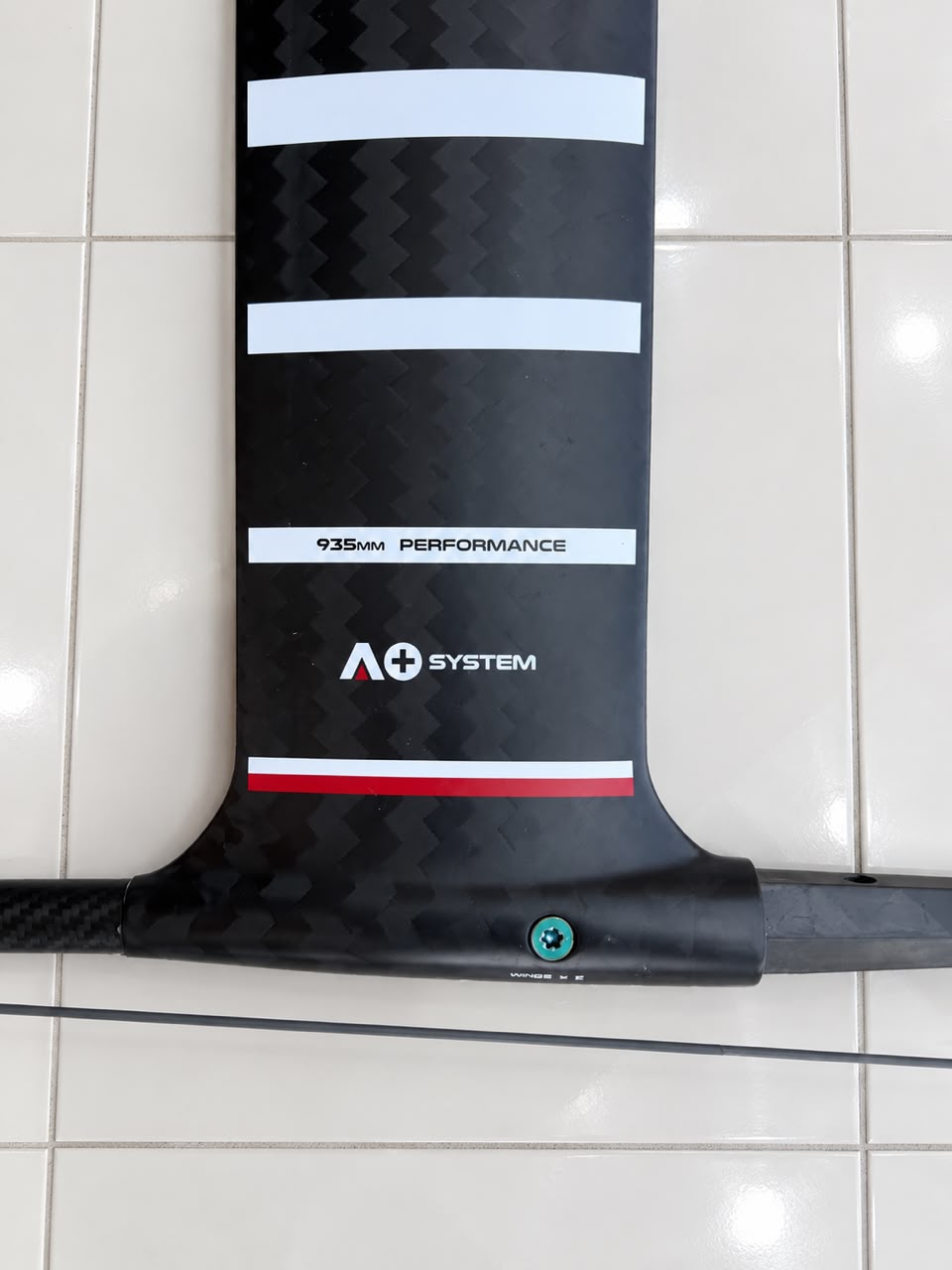
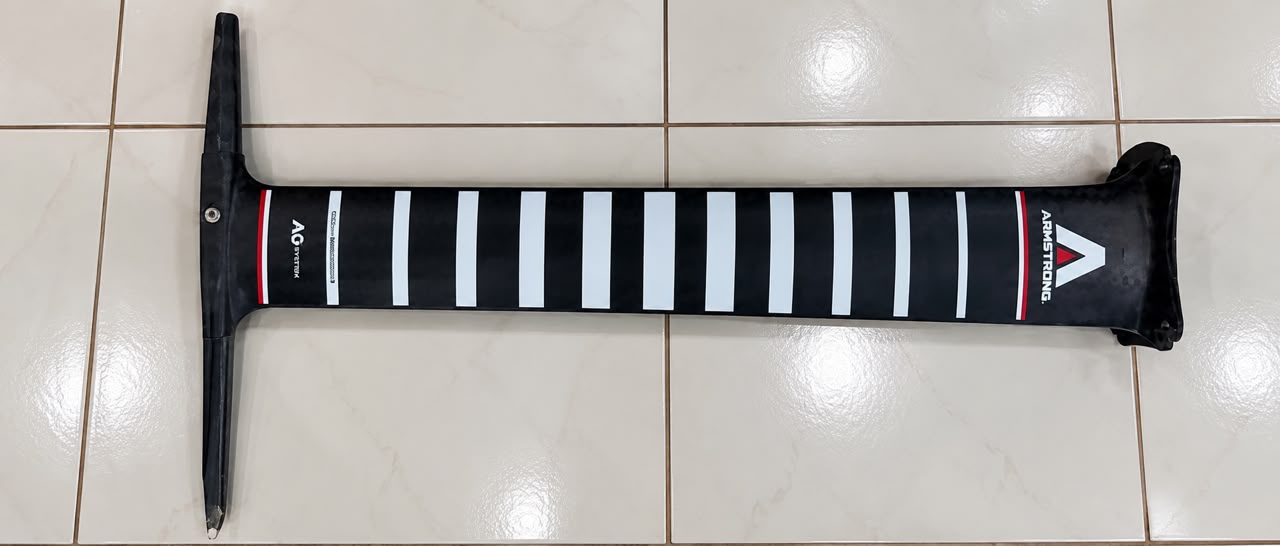
Mast armatrong
€500.00
The Armstrong Mast is offered in excellent condition and has been professionally inspected to confirm its quality, condition, and readiness for use. The mast has been carefully checked and found to have no damage, no repairs, no cracks, no structural issues, and no significant defects. It has been well maintained and is ready for many more foil sessions and jumps.
Every component has been carefully inspected, including the mast shaft, mast surface, board mounting interface, fuselage connection, mounting holes, screws, bolts, and associated hardware. The mast has been checked for impact damage, deformation, cracks, corrosion, loose fittings, and previous repairs.
Included components:
- Armstrong Mast
- Mast shaft
- Board mounting interface
- Fuselage connection
- Mounting screws and bolts
- Compatible connection hardware
- Protective storage equipment, if included
No cracks, repairs, structural damage, or significant wear are present. The mast remains clean, solid, well maintained, and ready for immediate use.
The Armstrong Mast is ready to use and ready for many more foil sessions and jumps again. It is an excellent choice for wing foiling, surf foiling, downwind foiling, prone foiling, pumping, carving, and advanced foil riding. A final pre-use inspection should always be completed, with all mounting hardware correctly secured before entering the water.
Description
Mast armatrong
Armstrong Mast – High-Performance Foil Mast for Advanced Foiling
The Armstrong Mast has been designed for riders seeking a strong, responsive, and reliable connection between the board and foil. As a central component of a modern foil system, the mast is responsible for transferring rider input directly into the front wing and stabilizer. Therefore, a well-engineered mast can have a significant influence on stability, control, acceleration, and overall riding performance.
Developed for demanding foil disciplines, the Armstrong Mast can be incorporated into wing foiling, surf foiling, downwind foiling, prone foiling, and other compatible applications. Furthermore, a rigid construction is provided so that efficient energy transfer can be maintained while the foil is being loaded during carving, pumping, acceleration, and high-speed riding
High-Performance Foil Construction
A performance-focused construction has been used to provide the structural strength required for modern foiling. Consequently, the mast can be relied upon when substantial forces are being transferred between the board and foil.
Because rigidity is particularly important in a foil mast, unwanted flex can be minimized. As a result, rider movements can be transmitted more directly into the foil system.
Moreover, the rigid connection can contribute to a more predictable riding sensation. This can be particularly valuable when advanced maneuvers are being performed or when higher speeds are being reached.
Key Product Highlights
- Armstrong Mast
- High-performance foil mast design
- Rigid structural construction
- Direct rider-to-foil connection
- Responsive handling
- Efficient power transfer
- Excellent stability
- Suitable for advanced foil riding
- Compatible with appropriate Armstrong foil-system components
- Suitable for wing foiling
- Suitable for surf foiling
- Suitable for downwind foiling
- Suitable for prone and pump foiling applications
- Designed for demanding sessions
Direct and Responsive Handling
A responsive mast is essential when precise foil control is required. Therefore, the Armstrong Mast can provide a direct connection between rider movements and the foil.
As pressure is transferred through the board, the mast responds as part of the complete foil structure. Consequently, turning, pumping, and directional changes can be performed with greater precision.
Furthermore, a rigid mast can provide useful feedback during carving. This allows subtle changes in pressure and body position to be communicated more effectively through the foil system.
Stability During Foil Flight
Stable flight is required when riders are progressing toward higher speeds and more technical maneuvers. Because of this, mast rigidity and structural consistency are important considerations.
Once the board has lifted from the water, the mast provides the primary vertical connection to the submerged foil. Consequently, stability can be maintained while the front wing generates lift.
Moreover, predictable mast behavior can help riders maintain confidence during longer flights, transitions, and changing water conditions.
Efficient Power Transfer
Energy must be transferred efficiently when foil pumping or accelerating. Therefore, the Armstrong Mast can be particularly valuable for riders who want a responsive foil setup.
When pressure is applied through the board, energy can be transferred through the mast toward the front wing and stabilizer. Consequently, rider movements can be converted into useful foil response.
Furthermore, efficient power transfer can become especially important during pumping, where repeated changes in pressure are used to maintain or increase speed.
Wing Foiling Applications
The Armstrong Mast can be incorporated into compatible wing-foiling setups where stability, rigidity, and responsive control are required.
During takeoff, the mast provides the structural connection between the board and foil. Once flight has been established, control can be maintained through coordinated rider movement and foil input.
Consequently, the mast can support freeriding, carving, transitions, jumping, and advanced wing-foil progression.
The appropriate mast configuration should always be selected according to rider experience, board characteristics, water depth, foil selection, and intended riding discipline.
Surf Foiling Performance
Surf foiling places different demands on a foil mast. Therefore, a responsive and predictable connection can be particularly valuable when the rider is following a wave.
As wave energy is captured by the foil, the mast allows rider movements to be transferred into the submerged front wing. Consequently, directional changes and carving can be controlled efficiently.
Furthermore, a rigid mast can provide useful feedback when the rider is moving across changing sections of a wave.
Downwind Foiling
Downwind foiling is strongly dependent on efficient energy management. Because of this, mast performance can have a significant influence on the overall foil setup.
As speed is generated over ocean bumps, the mast must remain stable while the front wing carries the rider above the water. Consequently, a rigid connection can help maintain predictable control.
Moreover, responsive handling can be valuable when the rider is connecting bumps and adjusting the foil’s direction.
Pump Foiling
Pumping places repeated loads on the complete foil system. Therefore, mast stiffness becomes particularly important when efficient pumping is being developed.
Pressure can be transferred through the board and mast while the rider changes the foil’s angle of attack. Consequently, forward momentum can be maintained when suitable technique is applied.
Furthermore, a responsive mast can provide immediate feedback during pumping, allowing experienced riders to refine their timing and movement.
Carving and Turning
Carving performance is influenced by the entire foil configuration. Therefore, the mast should provide a rigid foundation for the front wing and stabilizer.
As the rider leans into a turn, pressure is transferred through the board and mast. Consequently, the foil can be rolled progressively into the desired direction.
Moreover, a direct mast response can help riders maintain control when sharper or faster turns are attempted.
High-Speed Foiling
Higher speeds place additional demands on the foil system. Therefore, structural rigidity is essential when the mast is being used during fast riding.
As speed increases, the foil remains submerged beneath the board while substantial forces are generated. Consequently, the mast must provide a stable connection between the board and wings.
A rigid construction can help provide predictable handling when speed increases. However, high-speed foiling should always be approached progressively and only under suitable conditions.
Choosing the Correct Mast Setup
The correct mast selection should be based on the complete foil configuration.
Mast length can influence:
- Water clearance
- Leverage
- Turning characteristics
- Takeoff behavior
- Stability
- Riding depth
- Suitability for different disciplines
A longer mast can provide additional clearance and leverage, while a shorter mast can offer a more accessible setup in shallower water.
Therefore, the appropriate Armstrong mast configuration should be selected according to rider ability, board design, foil size, water depth, and intended application.
Compatibility With the Foil System
The Armstrong Mast should be used with compatible components. Front-wing size, stabilizer selection, fuselage configuration, and board characteristics can all influence the final riding sensation.
A larger front wing can provide additional lift and lower-speed performance. Meanwhile, a smaller front wing can provide greater speed and maneuverability.
Consequently, mast selection should be considered as part of the complete foil system rather than as an isolated component.
Rider Progression
The Armstrong mast can support a broad range of advanced foil disciplines.
Intermediate Riders
Controlled takeoffs, stable foil flight, basic carving, and transitions can be developed.
Advanced Riders
Pumping, wave riding, higher-speed cruising, and dynamic carving can be introduced.
Experienced Riders
Downwind connections, advanced pumping, aggressive carving, and technical foil maneuvers can be explored.
Therefore, the mast can remain useful as rider ability continues to develop.
Maintenance and Care
Regular inspection should be performed before every session. The mast surface, mounting interface, fuselage connection, bolts, screws, and surrounding hardware should be checked carefully.
After salt-water use, appropriate rinsing should be performed. Furthermore, the mast and associated components should be dried before storage.
Impacts against rocks, concrete, sand, or other hard surfaces should be avoided whenever possible. Any crack, deformation, unusual movement, or structural concern should be professionally inspected before the mast is returned to use.
Main Benefits at a Glance
- Armstrong foil mast
- Rigid structural design
- Direct foil response
- Efficient energy transfer
- Excellent stability
- Responsive carving
- Strong pumping potential
- High-speed control
- Wing-foiling compatibility
- Surf-foiling compatibility
- Downwind applications
- Pump-foiling potential
- Suitable for advanced progression
- Compatible with appropriate Armstrong foil components
Why Choose the Armstrong Mast?
The Armstrong Mast has been developed for riders who want a dependable and performance-oriented connection between the board and foil.
A rigid construction is combined with responsive handling and efficient energy transfer. Consequently, riders can benefit from improved control during acceleration, carving, pumping, transitions, and high-speed flight.
Furthermore, the mast can be incorporated into several foil disciplines, making it a versatile component for riders whose interests extend beyond a single style of riding.
A Reliable Foundation for Modern Foiling
The Armstrong Mast provides an important structural foundation for a complete foil system. Stability can be maintained during flight, while rider input can be transferred efficiently toward the front wing and stabilizer.Mast armatrong
Whether it is being used for wing foiling, surf foiling, downwind riding, prone foiling, pumping, or advanced carving, a properly matched Armstrong mast can support precise and controlled foil performance.Mast armatrong
For riders seeking a rigid, responsive, and versatile Armstrong foil mast for efficient power transfer, stable flight, carving, pumping, wing foiling, surf foiling, and advanced foil progression, this mast provides a strong foundation for demanding sessions on the water.
Armstrong Mast – Advanced Foiling Performance
Engineered for Efficient Foil Control
Greater precision is required as foil riding becomes faster and more technical. Therefore, the Armstrong Mast can be used as a rigid foundation for riders who want responsive handling, efficient energy transfer, and predictable control.Mast armatrong
A strong structural connection is provided between the board and foil. Consequently, rider movements can be transferred efficiently into the front wing and stabilizer.Mast armatrong
Furthermore, the mast can be incorporated into a range of compatible Armstrong foil configurations, allowing different riding characteristics to be developed according to the selected components.
Structural Rigidity
Rigidity is one of the most important characteristics of a performance foil mast. Because of this, the Armstrong Mast is intended to provide a firm connection between the rider and submerged foil.
When pressure is applied through the board, unnecessary flex can be minimized. Consequently, more direct feedback can be provided during acceleration, carving, and pumping.
Moreover, a rigid mast can help the foil maintain a predictable relationship with the board when increased loads are generated.Mast armatrong
Responsive Turning
Turning performance depends heavily on how efficiently rider input is transferred through the complete foil system.Mast armatrong
As the rider leans into a turn, pressure is transferred through the board and mast. Consequently, the front wing can respond progressively to the change in direction.
Furthermore, a responsive mast can make subtle adjustments easier to feel, allowing experienced riders to refine carving lines and transitions.Mast armatrong
Advanced Carving
Carving becomes increasingly dynamic as rider speed and confidence increase. Therefore, a rigid mast can provide valuable support during more aggressive turns.
The Armstrong Mast can be loaded through the board as the rider enters a turn. Consequently, the foil can be rolled progressively while speed is maintained.Mast armatrong
Moreover, direct response can be beneficial when several turns are linked together.
Carving Benefits
- Controlled directional changes
- Direct rider feedback
- Efficient pressure transfer
- Stable foil connection
- Responsive turning
- Suitable for progressive carving
Foil Pumping
Efficient pumping requires coordinated movement between the rider, board, mast, front wing, and stabilizer.Mast armatrong
Pressure can be applied rhythmically through the board while the foil is adjusted through changes in pitch and angle. Consequently, forward momentum can be generated or maintained.
The Armstrong Mast can provide a rigid connection through which these movements are transmitted.Mast armatrong
Furthermore, responsive feedback can help experienced riders refine timing and reduce unnecessary movement.Mast armatrong
Downwind Foiling
Downwind foiling places substantial demands on foil efficiency and rider control. Therefore, a stable and responsive mast can be particularly valuable.
As the rider accelerates onto an ocean bump, the mast remains connected to the submerged foil. Consequently, the rider can maintain control while the front wing carries speed between sections.
Furthermore, precise mast response can be useful when the rider changes direction while connecting successive bumps.Mast armatrong
Connecting Ocean Bumps
Efficient bump connection requires momentum to be preserved between sections.
As one bump is exited, the foil can be directed toward the next section. Consequently, speed can be maintained with reduced reliance on external propulsion.
A responsive mast can assist with these directional changes by providing direct feedback between the rider and foil.Mast armatrong
Therefore, the Armstrong Mast can form an important part of an advanced downwind configuration.
Wing Foiling
Wing foiling requires a mast that can provide stability during both takeoff and sustained flight.
As the board accelerates, the front wing begins generating lift. Consequently, the board can rise above the water while the mast remains submerged.Mast armatrong
Once flight has been established, the mast can provide the structural foundation required for carving, transitions, jumping, and freeriding.
Moreover, appropriate mast length can provide useful clearance between the foil and water surface during dynamic riding.Mast armatrong
Surf Foiling
Surf foiling demands responsive control because the rider must react continuously to changing wave energy.Mast armatrong
As the wave accelerates the foil, the rider can adjust pressure through the board. Consequently, the front wing can be redirected according to the shape of the wave.Mast armatrong
Furthermore, a rigid mast can provide useful feedback when carving across the wave face.
This can be especially valuable when tight turns or rapid directional changes are being attempted.
Prone Foiling
Prone foiling places greater emphasis on efficient pumping and low-speed lift.
Because the rider may enter the water without powered assistance from a wing, efficient energy transfer becomes particularly important.
The Armstrong Mast can provide a direct connection between the board and foil during repeated pumping movements.Mast armatrong
Consequently, rider input can be transferred efficiently through the foil system when suitable technique is applied.Mast armatrong
High-Speed Riding
Higher speeds generate increased forces throughout the foil system. Therefore, mast stiffness becomes increasingly important as speed increases.Mast armatrong
A rigid mast can provide a predictable connection between the board and front wing. Consequently, the rider can maintain greater control during fast runs.
Furthermore, direct feedback can assist with small adjustments when the foil is being ridden close to its performance limits.Mast armatrong
High-speed riding should always be approached progressively and only under suitable environmental conditions.Mast armatrong
Mast Length Selection
Mast length can significantly affect the overall riding experience.
A longer mast can provide:
- Increased water clearance
- Greater leverage
- More freedom during aggressive carving
- Additional clearance in larger waves
- Greater operating depth
A shorter mast can provide:
- Easier access in shallow water
- Lower overall riding height
- More accessible handling
- Convenient learning conditions
Therefore, mast length should be selected according to rider experience, water depth, board type, foil size, and intended discipline.Mast armatrong
Matching the Front Wing
Front-wing selection can strongly influence how the mast feels.
A larger front wing can provide increased lift and earlier takeoff. Conversely, a smaller wing can provide higher-speed capability and more agile handling.
Consequently, the mast should be paired with a front wing that matches the rider’s weight and intended riding style.Mast armatrong
Stabilizer Selection
The stabilizer also affects the complete foil system.
A larger stabilizer can provide additional stability and pitch support. Meanwhile, a smaller stabilizer can create a more responsive and maneuverable setup.
Therefore, stabilizer selection should be considered alongside front-wing size, mast length, fuselage configuration, board design, and rider preference.Mast armatrong
Board Compatibility
The board can influence the overall behavior of the mast and foil.
A larger board can provide increased stability during takeoff. Meanwhile, a smaller board can provide a more dynamic feeling once the rider has developed reliable foil control.
Furthermore, foil placement can influence balance and pitch characteristics.Mast armatrong
Consequently, board and mast selection should be considered together rather than independently.
Rider Progression
The Armstrong Mast can support riders across several advanced stages of development.
Intermediate Foilers
Stable flight, controlled turns, and basic pumping can be developed.
Advanced Foilers
Carving, wave riding, downwind connections, and higher-speed riding can be explored.
Experienced Foilers
Advanced pumping, aggressive carving, technical wave riding, and long-distance downwind foiling can be developed.Mast armatrong
Therefore, the mast can remain useful as riding technique becomes increasingly refined.
Maintenance and Inspection
The mast should be inspected carefully before every session.
Particular attention should be given to:
- Mast surface
- Mast-to-board connection
- Mast-to-fuselage connection
- Screws and bolts
- Mounting holes
- Signs of impact
- Surface damage
- Structural movement
After salt-water use, the mast and hardware should be rinsed with fresh water. Furthermore, components should be dried thoroughly before storage.
Any crack, deformation, unusual movement, damaged mounting area, or other structural concern should be professionally assessed before use.
Key Performance Advantages
- Armstrong foil mast
- Rigid structural foundation
- Direct rider feedback
- Efficient power transfer
- Responsive turning
- Strong carving potential
- Efficient pumping support
- High-speed stability
- Wing-foil compatibility
- Surf-foil applications
- Downwind potential
- Prone-foil applications
- Multiple mast-length options
- Advanced progression capability
Why Choose an Armstrong Mast?
The Armstrong Mast can provide the rigid foundation required for demanding foil riding.
Instead of allowing excessive movement between the board and submerged foil, a stiff mast can provide a more direct connection. Consequently, rider input can be translated efficiently into foil response.Mast armatrong
Furthermore, the mast can be used across multiple disciplines when compatible components are selected.Mast armatrong
A Strong Foundation for Advanced Foiling
The Armstrong Mast provides a versatile structural component for modern foil setups.Mast armatrong
Whether it is being used for wing foiling, surf foiling, prone foiling, downwind riding, pumping, or high-speed carving, the mast can support efficient energy transfer and predictable control.
For riders seeking a rigid and responsive Armstrong foil mast for carving, pumping, wing foiling, surf foiling, downwind foiling, prone riding, and advanced foil progression, the Armstrong Mast provides a dependable foundation for demanding sessions on the water.


Reviews
There are no reviews yet.