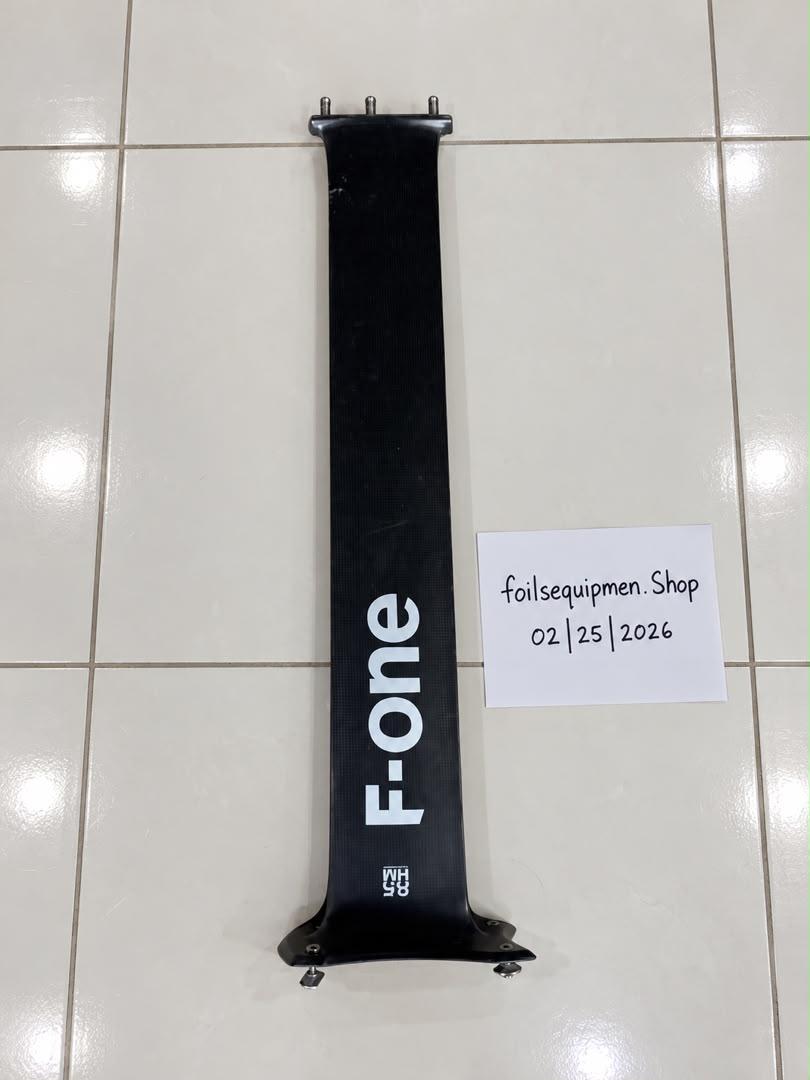
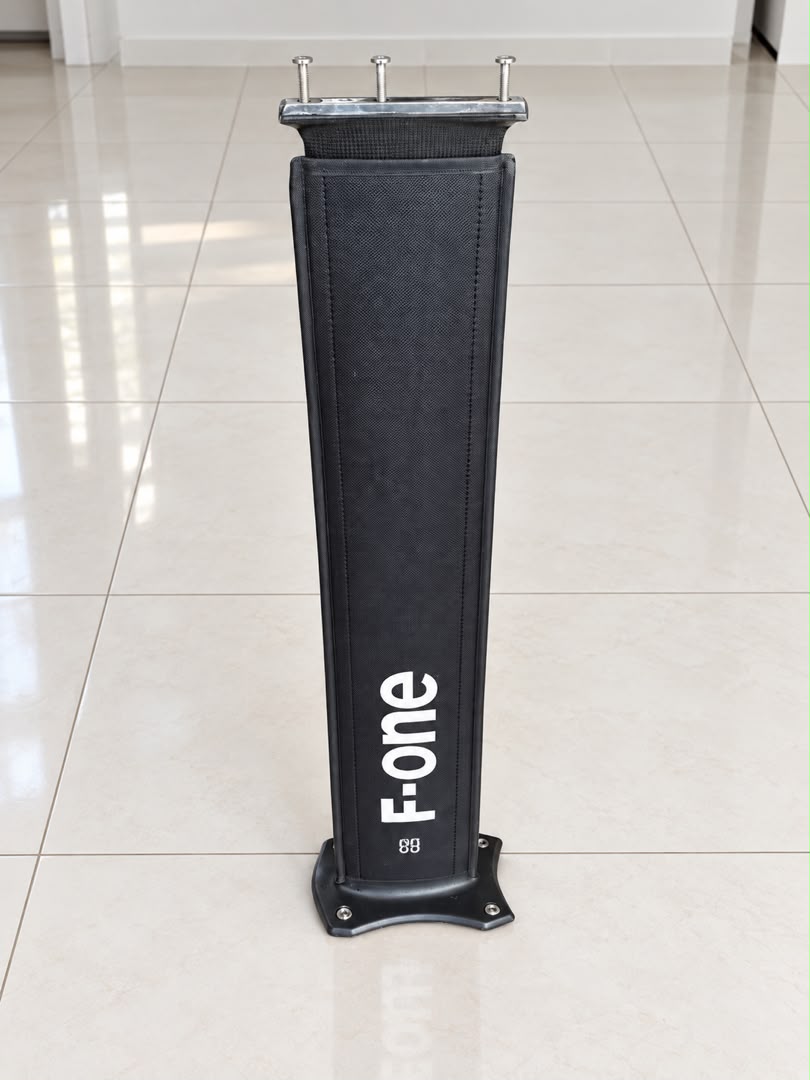
F-One mast HM 85 cm
€300.00
The F-One Mast HM 85 cm is offered in excellent condition and has been professionally inspected to confirm its overall quality, condition, and readiness for use. It has been carefully checked and found to have no damage, no repairs, no cracks, no delamination, and no significant structural defects. The mast has been well maintained and is ready for many more foiling sessions and rides.
Every component has been carefully inspected, including the 85 cm HM mast, carbon surface, board connection, fuselage connection, mounting points, screws, bolts, washers, and related hardware. Critical areas have been checked for impact marks, excessive wear, deformation, corrosion, loose hardware, and previous repairs.
Included components:
- F-One Mast HM 85 cm
- Compatible mast mounting hardware
- Screws and bolts
- Washers and connection hardware
- Mast/fuselage connection components
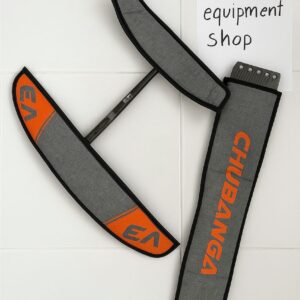
- Protective/storage bag, if included
- Related accessories, if included
No cracks, repairs, tears, delamination, or significant structural damage have been found. The mast remains clean, solid, and well maintained.
The F-One Mast HM 85 cm is ready to use and ready for many more foiling sessions and rides again. It is an excellent option for wing foiling, surf foiling, prone foiling, freeride foiling, carving, pumping, swell riding, and high-speed hydrofoiling. A complete professional inspection should always be performed before returning safety-critical equipment to use.
Description
F-One Mast HM 85 cm – Premium Hydrofoil Performance
The F-One Mast HM 85 cm has been developed for riders seeking a high-performance hydrofoil mast with a strong balance of stiffness, control, efficiency, and responsiveness. A length of 85 cm is provided, making the mast well suited to riders who want increased clearance and precise control during demanding foil sessions.
Built around F-One’s high-modulus carbon construction, the mast is designed to provide efficient power transfer between the rider, board, and foil. Consequently, rider inputs can be transmitted with minimal unwanted flex while stable control can be maintained at higher speeds.
Furthermore, the 85 cm configuration can provide a practical balance between maneuverability and water clearance, making it suitable for advanced wing foiling, surf foiling, freeride foiling, and other performance-oriented applications when correctly matched with compatible F-One components.
High-Modulus Carbon Construction
High-modulus carbon construction is used to achieve a strong and responsive mast platform.
As pressure is applied through the board and foil, the mast is designed to remain rigid and efficient. Consequently, less energy can be lost through unwanted flex during acceleration, carving, pumping, and high-speed riding
Moreover, the lightweight construction can help reduce the overall weight of the foil system.
Key Product Highlights
- F-One Mast HM 85 cm
- 85 cm mast length
- High-modulus carbon construction
- Lightweight performance design
- High stiffness
- Direct rider feedback
- Efficient power transfer
- Responsive handling
- Excellent water clearance
- Suitable for advanced foiling
- Wing-foiling applications
- Surf-foiling applications
- Freeride foiling applications
- Performance-oriented design
- Designed for compatible F-One foil systems
85 cm Mast Length
An 85 cm mast provides a useful amount of vertical clearance beneath the board.
Consequently, the rider can maintain foil height while reducing the likelihood of the board contacting the water during normal flight.
The additional length can also be useful when riding in deeper water or when more room is required for carving and pumping.
However, mast length should always be selected according to rider experience, water depth, board configuration, and intended discipline.
Direct Control
A stiff mast is important when precise foil control is required.
As the rider applies pressure through the board, the mast transfers that input toward the front wing and stabilizer. Consequently, directional changes can be made with greater precision.
Furthermore, the high-modulus construction can provide a direct connection between the rider and foil.
This characteristic can be especially valuable during high-speed carving and aggressive pumping.
High-Speed Performance
Higher speeds place greater demands on a hydrofoil mast.
At speed, unwanted flex can reduce control and create an inconsistent feeling.
Therefore, the rigid construction of the F-One Mast HM 85 cm can be particularly useful for riders who want a responsive platform for faster foil riding.
Moreover, the 85 cm length can provide additional stability in the vertical plane when the rider is maintaining a higher foil position.
Wing Foiling
The mast can be used for appropriate wing-foil configurations when compatible F-One components are selected.
During takeoff, sufficient board speed is developed before the foil rises from the water. As lift increases, the mast provides the structural connection between the board and foil.
Consequently, a stable and responsive platform can be created for cruising, carving, transitions, jumping, and higher-speed riding.
Surf Foiling
Surf foiling requires a mast that can provide control while remaining efficient through turns.
As the rider moves across the wave face, pressure can be shifted through the board. Consequently, the mast transfers those inputs to the foil.
The 85 cm length can provide useful clearance while still allowing experienced riders to control the foil dynamically.
Freeride Foiling
Freeride sessions can involve cruising, carving, transitions, and moderate-speed riding.
Therefore, a mast that provides both stiffness and predictable handling can be valuable.
The F-One HM 85 cm can be incorporated into a freeride setup when its dimensions and mounting system are compatible with the selected board and foil components.
Carving
Carving performance is strongly influenced by mast stiffness.
As the rider leans into a turn, lateral forces are transferred through the mast.
Consequently, a stiff mast can help maintain a more direct connection with the foil.
The 85 cm configuration can provide sufficient clearance for deeper turns while allowing experienced riders to maintain control.
Pumping
Foil pumping requires coordinated movement between the rider, board, mast, front wing, and stabilizer.
As the rider loads and unloads the foil, energy is transferred through the mast.
Consequently, excessive flex can be minimized when a sufficiently rigid mast is used.
The high-modulus construction can therefore support riders who are developing more advanced pumping techniques.
Water Clearance
One of the major benefits of an 85 cm mast is increased clearance.
A higher foil position can provide additional room when the rider is carving or riding over moderate surface irregularities.
Consequently, the board can remain clear of the water during normal flight.
Adequate water depth must always be confirmed before launching.
Pitch Control
Pitch control is affected by the complete foil system.
As the rider shifts weight forward or backward, the foil’s angle of attack changes.
Consequently, lift can be adjusted through controlled movements.
The mast provides the rigid structural connection required for those movements to be transferred efficiently.
Roll Control
Roll response is particularly important during carving and transitions.
As pressure is applied to one side of the board, the mast transmits that force to the foil.
Consequently, the front wing can be rolled into the desired direction.
The exact response will depend on the front wing, stabilizer, fuselage, board, and rider technique.
Foil System Compatibility
The F-One Mast HM 85 cm should only be used with compatible F-One foil-system components.
The board connection, fuselage, front wing, stabilizer, and mounting hardware should all be confirmed before assembly.
Consequently, the intended structural connection and riding characteristics can be maintained.
Incompatible components should never be forced together.
Board Compatibility
The board must have a compatible foil mounting system.
A correctly installed mast plate or mounting interface is essential for safe operation.
Consequently, the mast can transfer loads effectively between the board and foil.
All mounting screws and hardware should be checked before every session.
Front Wing Compatibility
Front-wing selection can substantially alter the overall foil characteristics.
A larger front wing can provide greater low-speed lift, while a smaller wing can emphasize speed and maneuverability.
Therefore, the HM 85 cm mast should be evaluated as part of the complete foil setup rather than as an isolated component.
Stabilizer Compatibility
The stabilizer contributes significantly to pitch stability and turning response.
Consequently, the appropriate stabilizer should be selected according to the rider’s weight, ability, front wing, and intended discipline.
A correctly balanced foil system can provide more predictable handling.
Fuselage Connection
The fuselage provides the connection between the mast, front wing, and stabilizer.
Therefore, the connection should be inspected carefully before each use.
The mounting surfaces should remain clean and free from debris.
Consequently, the components can be assembled correctly and securely.
Advanced Riding
The HM 85 cm configuration can be particularly useful for riders who have already developed basic foil control.
As technical ability improves, the additional mast length and stiffness can support more advanced riding techniques.
These can include:
- High-speed carving
- Pumping
- Wave riding
- Wing-foil transitions
- Advanced freeriding
- Long-distance foiling
- Performance-oriented riding
Rider Progression
The mast can support progression from controlled cruising toward more technical riding.
Stage One: Stable Flight
Basic foil height and directional control can be developed.
Stage Two: Carving
Controlled turns can be introduced.
Stage Three: Pumping
Energy transfer through the board and foil can be refined.
Stage Four: Advanced Maneuvers
More technical transitions and higher-speed riding can be explored.
Consequently, the mast can remain useful as the rider’s skills develop.
Handling in Chop
Choppy water requires active control.
As the board moves across uneven water, the rider must maintain consistent foil height.
The 85 cm mast can provide additional clearance, which can be useful in moderate chop.
Nevertheless, the rider should adjust speed and technique according to the conditions.
Deep-Water Applications
An 85 cm mast requires sufficient water depth.
Consequently, launch and landing areas should be evaluated carefully before use.
The additional depth requirement should be considered when selecting beaches, lakes, or other riding locations.
Shallow-Water Considerations
The mast should not be used where water depth is insufficient.
The foil can contact the bottom even when the board appears to have adequate clearance.
Therefore, riders should always verify local water depth before launching.
Maintenance
The mast should be inspected before every session.
Particular attention should be given to:
- Carbon surfaces
- Mast edges
- Board connection
- Fuselage connection
- Mounting holes
- Screw threads
- Plate or mounting interface
- Signs of impact
- Cracks
- Delamination
- Deformation
- Unusual movement
Any suspected structural damage should be professionally assessed before the mast is used again.
Salt-Water Care
Salt water can accumulate around mounting hardware and connection surfaces.
Therefore, the mast should be rinsed appropriately after salt-water use.
Furthermore, the mast should be dried before long-term storage.
Mounting hardware should also be checked regularly for corrosion or damage.
Carbon Protection
Carbon components should be handled carefully.
The mast should not be dropped onto concrete, rocks, or other hard surfaces.
Consequently, impact damage to the carbon structure can be minimized.
During transportation, the mast should be protected with appropriate padding or a foil bag.
Hardware Inspection
Mounting screws should be inspected regularly.
The correct screws and washers should always be used for the compatible F-One system.
Consequently, proper attachment can be maintained.
Loose, damaged, or incorrectly sized hardware should not be used.
Transportation
A dedicated foil bag can be used to protect the mast during transportation.
Sharp objects should be kept away from the carbon surface.
Furthermore, heavy equipment should not be placed directly on the mast.
Consequently, scratches, impacts, and unnecessary loading can be reduced.
Storage
The F-One Mast HM 85 cm should be stored in a clean and dry environment.
Excessive heat, moisture, chemicals, and prolonged direct sunlight should be avoided.
Furthermore, the mast should not be stored while wet.
Main Benefits at a Glance
- F-One Mast HM 85 cm
- 85 cm length
- High-modulus carbon construction
- Lightweight design
- High stiffness
- Responsive handling
- Direct rider feedback
- Efficient power transfer
- Increased water clearance
- High-speed capability
- Carving performance
- Pumping support
- Wing-foil applications
- Surf-foil applications
- Freeride applications
- Advanced foil riding
- Compatible F-One foil-system platform
Why Choose the F-One HM 85 cm?
The F-One Mast HM 85 cm can be an excellent choice for riders who want a stiff and responsive foil mast for performance-oriented riding.
Its 85 cm length provides a useful combination of water clearance and control, while the high-modulus carbon construction is intended to provide efficient energy transfer and a direct riding sensation.
Furthermore, the mast can be used across multiple foil disciplines when paired with compatible components.
A High-Performance Foil Mast
The F-One Mast HM 85 cm has been designed for riders who want precision, stiffness, and responsive handling from their foil system.
Whether it is being used for wing foiling, surf foiling, freeride foiling, carving, pumping, high-speed riding, or advanced hydrofoiling, the mast can provide a strong structural foundation for a properly matched setup.
For riders seeking an F-One HM 85 cm high-modulus carbon foil mast, this configuration provides a performance-oriented solution with useful water clearance and direct control.
Before every session, the mast, mounting interface, fuselage, front wing, stabilizer, screws, and connection points should be carefully inspected. All components should be confirmed as compatible before assembly, and the complete foil system should always be used within conditions appropriate for the rider’s experience and equipment.
F-One Mast HM 85 cm – Practical Performance and Riding Applications
Built for Precise Foil Control
The F-One Mast HM 85 cm has been designed for riders who want a rigid, responsive, and performance-oriented connection between the board and foil. With an 85 cm length, useful water clearance can be provided while precise control can still be maintained.
During demanding riding, substantial forces are transferred through the mast. Therefore, stiffness becomes particularly important. The high-modulus carbon construction is intended to minimize unwanted flex, allowing rider input to be transmitted efficiently to the foil.
Consequently, the mast can be well suited to experienced riders who want a more direct and controlled riding sensation.
High-Modulus Carbon Performance
High-modulus carbon is used to create a structure in which stiffness and weight can be balanced effectively.
As the rider accelerates, carves, pumps, or changes direction, loads are transferred through the mast. Consequently, a rigid connection can help maintain predictable foil behavior.
Furthermore, reduced unwanted flex can provide more immediate feedback during technical maneuvers.
This characteristic can be particularly valuable when speed and precision are prioritized.
Why 85 cm Is a Useful Length
An 85 cm mast provides a substantial amount of clearance beneath the board.
Consequently, the rider can maintain a higher foil position above the water while retaining sufficient room for normal carving and pitching movements.
The additional clearance can also be useful when riding over moderate chop.
However, deeper water is required compared with shorter mast configurations. Therefore, water depth should always be checked before launching.
High-Speed Riding
At higher speeds, foil stability becomes increasingly important.
As the foil accelerates, small rider inputs can have a noticeable effect on pitch and roll. Consequently, a stiff mast can provide valuable feedback.
The F-One HM 85 cm can be incorporated into performance-oriented setups where higher speeds are expected.
Furthermore, the mast length can provide useful clearance for riders who are comfortable maintaining a higher flight position.
Carving
Carving is one of the areas where mast stiffness can be especially noticeable.
As the rider leans into a turn, lateral loads are transferred through the mast. Consequently, the foil can respond directly to the rider’s movement.
A responsive setup can allow controlled arcs to be maintained while speed is carried through the turn.
Furthermore, the 85 cm length can provide enough clearance for deeper carving movements.
Aggressive Turns
More advanced riders can use the mast for dynamic directional changes.
As pressure is increased through the board, the foil can be rolled progressively.
Consequently, tighter turns can be developed when the complete foil system is correctly balanced.
Aggressive maneuvers should always be developed gradually because higher speeds and greater foil heights require greater control.
Pumping
Pumping involves coordinated movement between the rider, board, mast, front wing, and stabilizer.
As the rider loads and unloads the foil, energy is transferred through the mast.
Consequently, a rigid mast can help reduce unwanted energy loss caused by flex.
The high-modulus carbon construction can therefore be valuable for experienced riders working on efficient pumping techniques.
Wave Riding
Wave foiling places different demands on a mast than powered cruising.
Once wave energy is captured, the rider must manage speed, height, and direction without relying entirely on external propulsion.
Consequently, responsive handling becomes important.
The F-One Mast HM 85 cm can provide a useful platform for suitable wave-foiling configurations where sufficient water depth is available.
Swell Riding
Swell riding requires the foil to maintain speed while connecting moving sections of water.
As the rider moves between swell peaks, the mast provides the rigid connection needed for controlled pumping and turning.
Consequently, a stiff mast can contribute to a more direct feeling.
The 85 cm length can also provide additional clearance when the rider is working through uneven water surfaces.
Wing Foiling
The mast can be incorporated into compatible wing-foil setups.
During takeoff, the board is accelerated until sufficient lift is produced by the front wing. Consequently, the rider can rise onto foil and begin controlled flight.
Once airborne, the mast supports carving, transitions, cruising, jumping, and speed-oriented riding.
The complete foil configuration should always be selected according to rider ability and intended use.F-One mast HM 85 cm
Freeride Foiling
Freeride riding benefits from predictable control.
Cruising, carving, transitions, and moderate-speed riding can all be performed when an appropriate front wing and stabilizer are selected.
Consequently, the HM 85 cm can be used beyond purely technical applications.
Its performance characteristics can make it suitable for riders who want a responsive foil setup for regular sessions.F-One mast HM 85 cm
Prone Foiling
Prone foiling requires speed generation without continuous propulsion.
The rider must create enough speed during takeoff before the foil can lift the board.
Consequently, front-wing size and mast characteristics become important parts of the complete setup.F-One mast HM 85 cm
The HM 85 cm can be used in compatible prone configurations where the rider has sufficient experience and appropriate water depth is available.
Takeoff
Takeoff should be performed with adequate board speed.
As the front wing begins to generate lift, the rider should maintain controlled pitch rather than making abrupt movements.F-One mast HM 85 cm
Consequently, the board can rise progressively above the water.
An 85 cm mast provides additional room beneath the board once the foil is flying, but it also requires greater depth during launch.F-One mast HM 85 cm
Pitch Management
Pitch control becomes increasingly important as foil height increases.
Forward pressure can reduce the foil’s angle of attack, while rearward pressure can increase it.
Consequently, subtle movements can be used to maintain a consistent riding height.
A properly matched stabilizer can further influence pitch response.
Roll Management
Roll control is influenced by mast stiffness, front-wing geometry, stabilizer design, board shape, and rider technique.F-One mast HM 85 cm
As pressure is transferred from one side of the board to the other, the mast transmits that force toward the foil.F-One mast HM 85 cm
Consequently, carving and transitions can be performed with controlled rider input.
Mast Stiffness and Feedback
A stiff mast can provide direct feedback.
When the rider applies pressure, less movement is absorbed by the mast itself.
Consequently, the rider can feel the foil’s response more clearly.
This can be particularly useful during advanced carving, pumping, and high-speed riding.
Board Connection
The board connection represents a critical structural interface.
The compatible F-One mounting system should be used, with all screws and hardware installed correctly.F-One mast HM 85 cm
Consequently, the forces generated during foiling can be transferred appropriately.
The mounting area should be inspected regularly for damage or abnormal movement.
Fuselage Connection
The mast-to-fuselage connection should remain clean and secure.
Debris between the mating surfaces can prevent correct assembly.
Therefore, the connection should be cleaned before installation.
All bolts should be installed using the correct hardware and tightening procedure specified for the applicable F-One system.F-One mast HM 85 cm
Front Wing Setup
Front-wing size influences the overall behavior of the foil.
Larger wings can provide more lift at lower speeds, while smaller wings can emphasize speed and maneuverability.F-One mast HM 85 cm
Consequently, the HM 85 cm mast can be paired with different compatible front-wing configurations according to the rider’s objectives.F-One mast HM 85 cm
Stabilizer Setup
The stabilizer influences pitch balance and turning characteristics.
A larger stabilizer can provide more stability, while a smaller stabilizer can create a looser and more maneuverable sensation.F-One mast HM 85 cm
Therefore, the stabilizer should be selected according to the complete foil configuration.
Rider Weight
Rider weight should be considered when choosing the complete foil system.
A heavier rider may require greater lift from the front wing, while a lighter rider may prefer a smaller configuration.F-One mast HM 85 cm
Consequently, the mast should be evaluated together with the front wing, stabilizer, board, and intended discipline.F-One mast HM 85 cm
Water Conditions
Water conditions can strongly influence foil control.
Flat water can make high-speed riding easier to manage, while chop requires more active pitch control.F-One mast HM 85 cm
Consequently, riding technique should be adjusted according to the conditions.
The 85 cm mast should only be used where sufficient water depth is available.
Safety During Launch
The foil should be handled carefully before entering the water.
Sharp foil edges can cause injury if they are contacted directly.
Consequently, the complete foil should be assembled and carried with appropriate caution.
The mast and wing should be checked for secure connections before entering deeper water.
Pre-Ride Inspection
A complete inspection should be performed before every session.
Particular attention should be given to:
- Mast surface
- Carbon structure
- Board connection
- Fuselage connection
- Mounting holes
- Bolts
- Screws
- Washers
- Connection surfaces
- Signs of impact
- Cracks
- Delamination
- Deformation
- Unusual movement
Any suspected structural damage should be professionally assessed before the mast is used again.
Salt-Water Maintenance
Salt water should be rinsed from the mast and associated hardware after use.
Furthermore, the mast should be dried thoroughly before storage.
Mounting hardware should be inspected regularly because corrosion can develop around exposed metal components.F-One mast HM 85 cm
Consequently, appropriate maintenance can help preserve the complete foil system.
Carbon Protection
Carbon should be protected from direct impacts.F-One mast HM 85 cm
The mast should not be dropped onto rocks, concrete, or other hard surfaces.
Consequently, unnecessary structural stress can be avoided.
During transportation, protective padding or a suitable foil bag should be used.
Hardware Maintenance
Correct hardware should always be used.
Screws and bolts should be inspected for damaged threads, corrosion, or deformation.
Consequently, reliable assembly can be maintained.
Loose hardware should never be ignored.F-One mast HM 85 cm
Transportation
The mast should be protected while being transported.
A dedicated foil bag can reduce contact with hard surfaces.
Furthermore, heavy equipment should not be placed directly on the mast.
Consequently, scratches and accidental impacts can be minimized.
Storage
The F-One Mast HM 85 cm should be stored in a clean, dry environment.
Excessive heat, moisture, chemicals, and prolonged direct sunlight should be avoided.
Furthermore, the mast should be completely dry before long-term storage.F-One mast HM 85 cm
Suitable Applications
The HM 85 cm can be considered for:
- Wing foiling
- Surf foiling
- Prone foiling
- Freeride foiling
- Wave riding
- Swell riding
- Pumping
- High-speed foiling
- Dynamic carving
- Advanced hydrofoiling
- Performance-oriented riding
Main Advantages
- F-One Mast HM 85 cm
- 85 cm length
- High-modulus carbon construction
- Stiff and responsive structure
- Direct rider feedback
- Efficient power transfer
- Increased water clearance
- High-speed capability
- Strong carving response
- Pumping support
- Wing-foiling compatibility
- Surf-foiling applications
- Prone-foiling potential
- Freeride versatility
- Performance-oriented design
Who Is It Best Suited For?
The F-One Mast HM 85 cm is best suited to riders who already have a solid understanding of hydrofoil control and want a more performance-focused setup.F-One mast HM 85 cm
Because an 85 cm mast provides substantial height above the water, riders should be comfortable with foil height management and should have sufficient water depth available.
Consequently, the mast can be particularly useful for experienced riders who prioritize stiffness, responsiveness, and higher-speed control.F-One mast HM 85 cm
Why Choose the HM 85 cm?
The F-One Mast HM 85 cm can provide an effective combination of stiffness, lightweight carbon construction, water clearance, and responsive handling.
Its high-modulus carbon construction is intended to provide efficient energy transfer, while the 85 cm length can provide additional clearance for advanced carving and higher foil flight.
Furthermore, the mast can support multiple disciplines when it is paired with compatible F-One components.F-One mast HM 85 cm
A Performance-Oriented F-One Mast
The F-One Mast HM 85 cm has been designed for riders who want a rigid and responsive foundation for advanced hydrofoiling.F-One mast HM 85 cm
Whether it is being used for wing foiling, surf foiling, prone foiling, swell riding, pumping, carving, freeride foiling, or high-speed riding, the mast can provide the structural stiffness required for a properly matched foil system.
For riders seeking an F-One HM 85 cm high-modulus carbon hydrofoil mast, this configuration offers a strong combination of performance, control, and water clearance.
Before every session, the mast, board connection, fuselage, front wing, stabilizer, screws, bolts, and mounting surfaces should be inspected carefully. All components should be confirmed as compatible before assembly, and the complete foil system should always be used within conditions appropriate for the rider’s experience and .


Reviews
There are no reviews yet.