
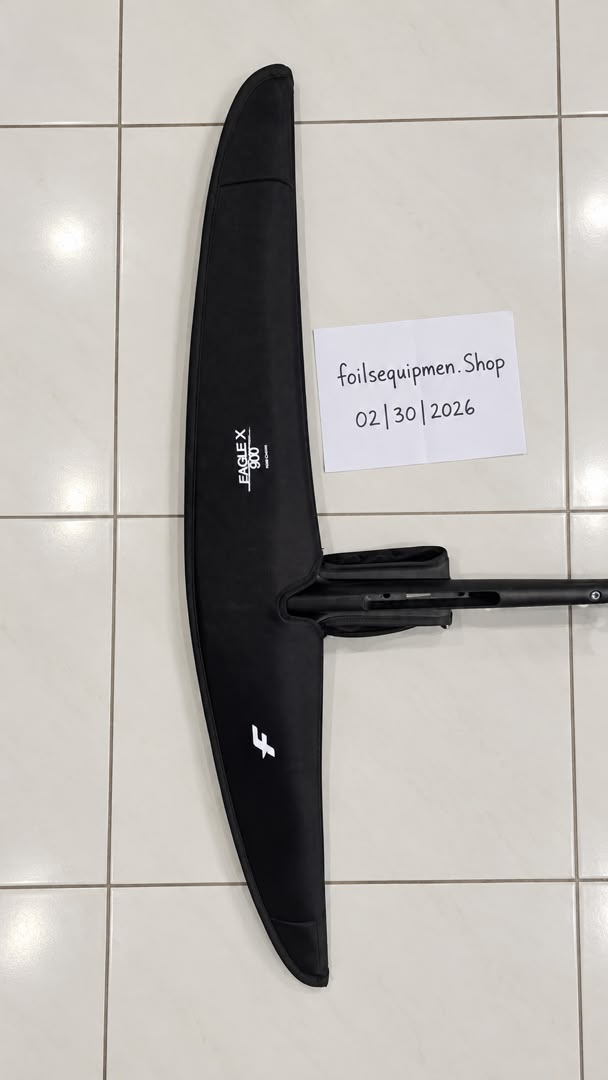
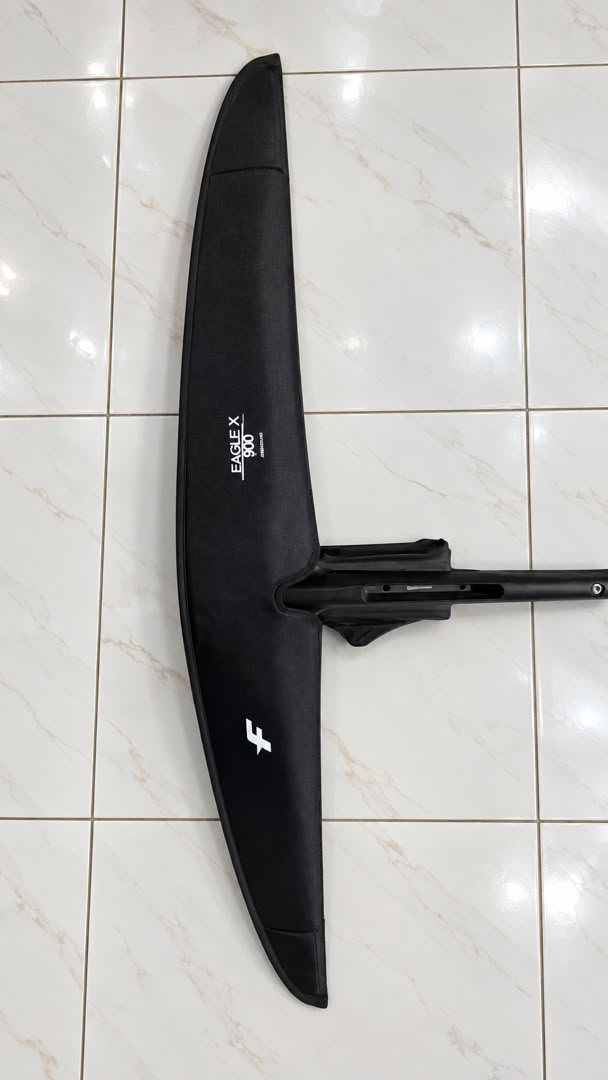
Eagle, X, 900 Front wing,T2,2026
€500.00
The Eagle X 900 Front Wing T2 2026 is offered in excellent condition and has been professionally inspected to confirm its overall quality and readiness for use. It has been carefully checked and is reported to have no damage, no repairs, no cracks, no tears, and no significant structural defects. It has been well maintained and is ready for many more foiling sessions and jumps.
Every component has been carefully inspected, including the front wing body, leading edge, trailing edge, wing tips, mounting surface, bolt holes, connection points, threaded areas, and related mounting hardware. The wing has been checked for previous repairs, impact damage, excessive wear, deformation, and other visible defects.
Included components:
- Eagle X 900 Front Wing T2 2026
- Front wing body
- Leading edge
- Trailing edge
- Wing tips
- Mounting points
- Bolt holes and threaded connections
- Mounting hardware, if included
- Protective/storage bag, if included
- Other included accessories
No tears, repairs, cracks, or significant damage have been identified. The wing remains clean, solid, and well maintained.
The Eagle X 900 Front Wing T2 2026 is ready to use and ready for many more foiling sessions and jumps again. It is an excellent option for wing foiling, freeride, carving, pumping, wave riding, swell riding, and suitable advanced foiling applications. A qualified professional should always complete the required pre-flight inspection before use.
Description
Eagle X 900 Front Wing T2 2026
The Eagle X 900 Front Wing T2 2026 has been designed for riders seeking a refined combination of efficiency, stability, glide, and responsive foil control. A 900-class front wing is provided, making this configuration particularly attractive for riders who want a versatile platform for modern wing foiling, freeride foiling, carving, pumping, and performance-oriented riding
Developed around the Eagle X platform, the wing is intended to provide efficient lift while maintaining controlled handling. Consequently, a balanced relationship between speed and maneuverability can be achieved when the wing is paired with a compatible mast, fuselage, stabilizer, board, and riding style.
Furthermore, the T2 2026 configuration can be incorporated into a modern foil setup where efficient acceleration and predictable control are valued.
Refined Front-Wing Design
A carefully shaped front-wing profile is used so that lift and hydrodynamic efficiency can be balanced.
As water flows across the wing surface, lift is generated and transferred through the foil system. Consequently, the rider can be supported above the water once sufficient speed has been reached.
Moreover, the design can be used to create a controlled platform for progressing from straightforward cruising toward more dynamic foil techniques.
Key Product Highlights
- Eagle X 900 Front Wing
- T2 2026 configuration
- 900-class front-wing size
- Performance-oriented foil design
- Efficient lift generation
- Responsive handling
- Stable flight characteristics
- Smooth acceleration
- Excellent glide potential
- Carving applications
- Freeride foiling
- Wing-foiling applications
- Pumping potential
- Wave and swell riding
- Suitable for experienced riders
- Designed for compatible foil systems
900-Class Configuration
The 900-class size provides a practical balance between lift and maneuverability.
Consequently, the wing can be suitable for riders who want efficient takeoff without moving into an extremely large front-wing configuration.
Rider weight, foil mast length, board volume, stabilizer size, wind strength, and riding ability should always be considered when selecting a front wing.
Therefore, the Eagle X 900 should be treated as part of a complete foil system rather than as an isolated component.
Efficient Lift
Efficient lift is one of the most important characteristics of a front wing.
As speed is generated, water pressure is developed across the wing profile. Consequently, upward force is produced and the board can rise onto foil.
Once flight has been established, efficient lift can help the rider maintain height without excessive speed input.
Smooth Takeoff
A predictable takeoff can make foil sessions more enjoyable.
As the board accelerates, the front wing gradually generates sufficient lift.
Consequently, the transition from displacement to foil flight can be managed more effectively.
The actual takeoff speed will depend on rider weight, board design, foil configuration, and environmental conditions.
Glide Performance
Glide is particularly valuable when the rider moves between sections of wind or swell.
As the front wing continues producing lift, forward momentum can be maintained.
Consequently, longer connections between swell sections can be achieved when the complete foil setup is optimized.
Pumping
Pumping can be performed when the wing and complete foil configuration are appropriately matched.
As pressure is alternated through the board and foil, additional momentum can be generated.
Consequently, the rider can maintain flight through periods of reduced propulsion.
Pumping efficiency will depend heavily on technique and foil geometry.
Carving
Carving requires a front wing that can respond predictably to changes in rider pressure.
As the rider leans into a turn, the foil can be rolled progressively.
Consequently, controlled directional changes can be achieved.
The Eagle X 900 can be considered for riders who want a combination of stability and responsive turning.
Tight Turns
A responsive front wing can be valuable when tighter turns are attempted.
As the rider increases pressure through the board, the foil can respond to the change in loading.
Consequently, the riding line can be adjusted with greater precision.
The final turning characteristics will depend on the complete foil configuration.
Freeride Foiling
Freeride foiling requires a useful balance between speed, stability, and maneuverability.
The Eagle X 900 Front Wing T2 2026 can be incorporated into suitable freeride setups.
Consequently, cruising, carving, transitions, pumping, and general foil progression can be supported.
Wing Foiling
Wing foiling places considerable importance on early lift and predictable control.
As the wing generates forward power, the board can accelerate.
Consequently, the front wing can generate sufficient lift for takeoff.
Once airborne, the foil can be used to maintain efficient flight while the hand-held wing provides propulsion.
Wave Riding
Wave riding requires efficient glide and controlled turning.
As the rider enters a wave section, the front wing can maintain lift while the wing is depowered.
Consequently, more attention can be given to the wave and foil rather than continuous propulsion.
Swell Riding
Swell riding depends heavily on maintaining momentum.
As one section of swell loses energy, the foil needs to carry sufficient speed toward the next section.
Consequently, efficient glide can become particularly valuable.
The Eagle X 900 can be considered for suitable swell-oriented configurations when matched correctly with the rider and other foil components.
Downwind Foiling
Downwind riding requires precise control and efficient glide.
As the rider connects moving sections of water, the front wing provides the primary source of hydrodynamic lift.
Consequently, an efficient front wing can help preserve momentum.
Downwind foiling should only be attempted by suitably experienced riders using appropriate equipment and conditions.
Pumping Between Swells
When natural propulsion decreases, pumping can be used to maintain flight.
As the rider coordinates body movement with the foil, additional lift and forward momentum can be generated.
Consequently, connections between swell sections can potentially be extended.
Stability
Stability is valuable during learning and longer-distance cruising.
As the rider maintains a consistent foil height, predictable lift can make control easier.
Consequently, the wing can provide a stable foundation while more advanced skills are developed.
Speed
The Eagle X 900 can provide a useful balance between lift and speed.
As the rider accelerates, hydrodynamic drag and lift characteristics change.
Consequently, the final speed potential will depend on wing loading, mast configuration, stabilizer selection, rider technique, and water conditions.
Pitch Control
Pitch stability influences how easily foil height can be controlled.
As the rider moves forward or backward, changes in pitch can occur.
Consequently, the complete foil system should be balanced carefully.
Stabilizer selection can have a significant influence on pitch behavior.
Roll Control
Roll response affects carving and directional changes.
As the rider shifts weight laterally, the foil responds through the mast and front wing.
Consequently, turns can be initiated and controlled.
The final roll characteristics will depend on the complete foil configuration.
Mast Compatibility
The front wing should only be paired with a compatible mast.
As the mast transfers forces between the board and foil, the connection must be mechanically secure.
Consequently, the correct mounting interface should always be confirmed before use.
Fuselage Compatibility
The fuselage establishes the relationship between the front wing and stabilizer.
As these components interact hydrodynamically, correct compatibility is essential.
Consequently, only approved or compatible fuselage configurations should be used.
Stabilizer Selection
The stabilizer affects pitch stability, efficiency, and turning behavior.
A larger stabilizer can generally provide greater stability, while a smaller configuration may emphasize maneuverability.
Consequently, stabilizer selection should be made according to rider preference and the intended application.
Board Selection
Board characteristics influence takeoff and overall foil behavior.
A larger board can provide increased stability and earlier acceleration.
Meanwhile, a smaller board can produce a more dynamic riding experience.
Consequently, the Eagle X 900 should be matched with a board appropriate for the rider’s weight, skill, and intended discipline.
Rider Weight
Rider weight should be considered carefully.
As rider weight increases, greater lift may be required for comparable takeoff performance.
Consequently, front-wing selection should be based on the complete equipment setup.
Wind Conditions
Wind strength influences the amount of power available during wing foiling.
As wind speed changes, the required front-wing size can also change.
Consequently, the Eagle X 900 should be selected according to the intended wind range and complete foil configuration.
Water Conditions
Water conditions can affect foil handling.
Flat water can make takeoff and speed development easier, while chop can require more active pitch and roll control.
Consequently, rider technique should be adapted to the environment.
Jumping
Experienced riders can use an appropriate front-wing configuration for jumping.
As speed and lift are generated, the board can be taken clear of the water.
Consequently, aerial maneuvers can be developed.
Jumping should only be attempted with suitable training, equipment, water depth, and conditions.
Landing
Landing control is essential after any jump.
As the board returns toward the water, pitch and roll must be controlled.
Consequently, a predictable front wing can be beneficial during the final stage.
The rider should progressively develop landing technique rather than immediately attempting high-risk maneuvers.
Transitions
Foil transitions require coordinated control.
As the rider changes direction, the front wing can be rolled while the board follows the new line.
Consequently, controlled gybes and tacks can be developed.
Maintenance
The front wing should be inspected before every session.
Particular attention should be given to:
- Leading edge
- Trailing edge
- Wing tips
- Mounting surface
- Bolt holes
- Threads
- Fuselage connection
- Signs of impact
- Cracks
- Deformation
- Surface damage
Consequently, potential issues can be identified before entering the water.
Mounting Hardware
Bolts and mounting hardware should be checked regularly.
As the foil is subjected to repeated loading, loose or damaged hardware can compromise the connection.
Consequently, the appropriate hardware should be installed and tightened according to manufacturer specifications.
Impact Protection
The front wing should be protected from hard impacts.
As carbon or composite foil structures can be damaged by rocks, concrete, and other hard surfaces, careful handling is required.
Consequently, the wing should be carried and stored carefully.
Salt-Water Care
After salt-water use, the foil should be rinsed with fresh water.
Furthermore, it should be dried before long-term storage.
Consequently, salt accumulation around mounting hardware can be reduced.
Sand Protection
Sand should be kept away from mounting surfaces and threaded connections.
As trapped particles can interfere with proper component contact, the mounting areas should be cleaned before assembly.
Consequently, reliable connections can be maintained.
Transportation
The Eagle X 900 should be transported in suitable protective equipment.
Sharp objects should not be placed against the foil surface.
Consequently, unnecessary scratches and impact damage can be minimized.
Storage
The front wing should be stored in a clean and dry location.
Excessive heat, moisture, and prolonged direct sunlight should be avoided.
Furthermore, the wing should be protected from accidental impacts.
Practical Applications
The Eagle X 900 Front Wing T2 2026 can be considered for:
- Wing foiling
- Freeride foiling
- Carving
- Pumping
- Wave riding
- Swell riding
- Downwind foiling
- Foil progression
- Advanced foil techniques
- Suitable jumping applications
Consequently, a wide range of foil disciplines can be supported.
Main Benefits at a Glance
- Eagle X 900 Front Wing T2 2026
- 900-class front-wing configuration
- Performance-oriented design
- Efficient lift
- Smooth takeoff
- Strong glide potential
- Responsive carving
- Stable flight characteristics
- Pumping capability
- Wave-riding applications
- Swell-riding potential
- Wing-foiling compatibility
- Freeride versatility
- Advanced riding potential
- Suitable for compatible foil systems
Why Choose the Eagle X 900 T2 2026?
The Eagle X 900 Front Wing T2 2026 can be an excellent choice for riders who want a front wing that balances efficient lift, controlled stability, glide, and responsive handling.
Its 900-class configuration can provide useful versatility without moving into an excessively large front-wing format. Consequently, it can be considered for riders who want one foil component capable of supporting multiple riding styles.
Furthermore, when matched with a compatible mast, fuselage, stabilizer, and board, the wing can provide a refined platform for continued progression.
A Versatile Front Wing for Modern Foiling
The Eagle X 900 Front Wing T2 2026 has been designed around the needs of riders who value efficient flight and responsive control.
Whether it is being used for wing foiling, freeride riding, carving, pumping, wave riding, swell riding, downwind foiling, or advanced foil progression, performance will depend on correct equipment matching, rider technique, and suitable conditions.
For riders seeking an Eagle X 900 Front Wing T2 2026 with efficient lift, smooth glide, responsive carving, and versatile foil performance, this configuration offers a compelling option for a compatible modern foil system.
Before every session, the wing, mounting surface, bolt holes, threads, leading edge, trailing edge, wing tips, and connection points should be carefully inspected. Appropriate mounting hardware should be used according to manufacturer specifications, and the complete foil system should always be used within conditions appropriate for the rider’s experience and equipment.
Eagle X 900 Front Wing T2 2026 – Practical Use and Performance
A Versatile Foil Platform
The Eagle X 900 Front Wing T2 2026 can be used as a versatile front-wing option for riders seeking a combination of efficient lift, glide, stability, and responsive handling. Its 900-class configuration can provide a practical balance between early flight and maneuverability.
As the rider becomes more confident, the same wing can be used across different riding styles. Consequently, it can support freeride cruising, carving, pumping, wave riding, swell riding, and suitable downwind applications.
Early Takeoff
Early takeoff can be valuable when wind or wave energy is limited.
As the board accelerates, the front wing begins generating hydrodynamic lift. Consequently, the board can rise progressively above the water.
A correctly matched board and foil system can further improve the ease of takeoff.
Acceleration
Acceleration is influenced by the interaction between front wing, board, mast, stabilizer, and rider.
As forward speed increases, lift is generated more efficiently.
Consequently, the rider can transition from board contact toward stable foil flight.
The final acceleration characteristics will depend on the complete configuration.
Stable Foil Flight
Once sufficient speed has been reached, stable flight can be maintained through balanced rider input.
As weight is shifted forward or backward, foil pitch is adjusted.
Consequently, the rider can control height and maintain a consistent flight path.
Glide
Glide performance becomes particularly valuable when propulsion decreases.
As the rider moves between areas of stronger wind or swell, momentum can be preserved through efficient foil flight.
Consequently, longer connections can be achieved when the foil, board, and rider are appropriately matched.
Pumping
Pumping can be used to maintain or recover speed.
As the rider applies coordinated movements through the board and foil, lift and forward momentum can be generated.
Consequently, flight can be maintained through weaker sections.
The effectiveness of pumping will depend on technique, foil geometry, board design, and water conditions.
Wing Foiling
The Eagle X 900 can be incorporated into a suitable wing-foiling system.
As the hand-held wing provides forward propulsion, the board can accelerate until the front wing generates enough lift.
Consequently, stable flight can be established.
Once airborne, the front wing can provide efficient lift while the rider manages pitch, roll, and direction.
Freeride Foiling
Freeride sessions can benefit from a balanced front wing.
As the rider cruises across the water, predictable lift can make height management easier.
Consequently, longer sessions can be enjoyed while carving, turning, and practicing transitions.
Carving
Carving requires controlled roll and pitch response.
As the rider leans into a turn, pressure is transferred through the board and mast.
Consequently, the front wing can roll progressively into the desired direction.
The 900-class configuration can provide a useful combination of stability and maneuverability.
Tight Carving
Tighter turns require greater control.
As the rider increases lateral pressure, the foil can be rolled more aggressively.
Consequently, a tighter riding line can be maintained.
Rider technique and stabilizer selection will strongly influence the final response.
Wave Riding
Wave riding places greater emphasis on glide and maneuverability.
As a wave is approached, the rider can use the wing to generate enough speed for entry.
Once wave energy becomes available, the hand-held wing can be depowered.
Consequently, the front foil can become the primary source of lift and movement.
Surf Foiling
When used in a suitable surf-foil configuration, the front wing can provide lift beneath the board.
As the rider catches a suitable wave, the foil can rise and begin gliding.
Consequently, the rider can travel along the wave face with reduced reliance on propulsion from the wing.
Swell Riding
Swell riding requires efficient momentum management.
As one swell section fades, the rider must carry enough speed toward the next section.
Consequently, glide becomes particularly important.
The Eagle X 900 can be considered for suitable swell applications where the complete setup has been correctly matched.
Downwind Foiling
Downwind foiling places significant demands on foil efficiency and rider control.
As the rider connects moving water sections, the front wing must maintain sufficient lift at changing speeds.
Consequently, an efficient wing can help preserve momentum.
Downwind riding should only be attempted by suitably experienced riders using appropriate equipment and conditions.
Connecting Swells
Connecting swells requires careful speed management.
As the rider leaves one section, pumping and body movement can be used to maintain flight.
Consequently, the next section can potentially be reached without touching down.
The rider’s technique remains a major factor in achieving successful connections.
Upwind Riding
The front wing can be used for suitable upwind foil applications.
As the rider combines foil lift with appropriate board and wing positioning, progress can be made against the wind.
Consequently, longer routes can be completed efficiently.
The achievable angle will depend on the foil system and rider technique.
Jumping
Experienced riders can use an appropriate foil setup for controlled jumps.
As speed and lift are generated, the board can leave the water.
Consequently, aerial techniques can be developed.
Jumping should only be attempted with sufficient experience, water depth, and appropriate equipment.
Landing
A controlled landing requires careful pitch management.
As the board returns toward the water, the front wing must remain under control.
Consequently, a smooth touchdown can be achieved when the rider maintains appropriate speed and height.
Transitions
Transitions require coordination between rider, board, foil, and wing.
As the rider changes direction, the front wing is rolled while the board follows the new path.
Consequently, controlled gybes and tacks can be developed.
Pump-to-Carve Transitions
Combining pumping with carving can help maintain momentum through a turn.
As the rider shifts pressure from one side of the board to the other, the foil can be rolled progressively.
Consequently, the turn can be linked into another powered section.
Pitch Control
Pitch control determines how consistently foil height can be maintained.
As the rider moves weight forward, the front wing’s angle of attack is altered.
Consequently, lift and height can be adjusted.
Small, controlled movements should be favored.
Roll Control
Roll control is essential for turning.
As pressure is shifted laterally, the foil responds through the mast and front wing.
Consequently, the rider can initiate directional changes.
The exact roll response will depend on wing shape, stabilizer size, mast configuration, and rider technique.
Stabilizer Matching
The stabilizer should be selected carefully.
As the rear wing influences pitch and yaw behavior, its size and geometry can significantly affect the complete setup.
Consequently, only compatible stabilizers should be used.
Mast Selection
The mast provides the structural connection between board and foil.
As loads are transferred through the mast, appropriate stiffness and compatibility are required.
Consequently, the front wing should only be installed on a compatible mast system.
Fuselage Selection
The fuselage controls the relationship between front wing and stabilizer.
As hydrodynamic forces are transferred through the fuselage, correct compatibility is essential.
Consequently, the recommended mounting system should be followed.
Board Selection
Board characteristics can influence takeoff and stability.
A larger board can provide increased stability and easier acceleration.
Meanwhile, a smaller board can provide a more dynamic riding experience.
Consequently, board selection should be based on rider weight, skill level, foil configuration, and intended conditions.
Rider Weight
Rider weight is an important consideration.
As rider weight increases, greater lift is generally required for comparable takeoff performance.
Consequently, the 900-class front wing should be matched to an appropriate rider and equipment configuration.
Wind Conditions
Wind strength influences how the front wing is used.
As wind increases, a smaller wing may become preferable for higher-speed riding.
Conversely, weaker conditions can benefit from greater lift.
Consequently, the 900-class configuration should be selected according to the intended conditions.
Water Depth
Adequate water depth should always be confirmed before launching.
As the foil extends below the board, underwater obstacles can create serious hazards.
Consequently, shallow areas, rocks, reefs, and submerged objects should be avoided.
Beach Handling
The front wing should not be dragged across abrasive surfaces.
As composite foil surfaces encounter rocks, concrete, or rough sand, scratches and edge damage can occur.
Consequently, the foil should be carried carefully.
Leading-Edge Protection
The leading edge should receive particular attention.
As impacts can damage the foil profile, contact with hard objects should be minimized.
Consequently, protective transportation and careful handling are recommended.
Mounting Hardware
Mounting bolts should be inspected before every session.
As the foil experiences repeated loading, loose or damaged hardware can affect the connection.
Consequently, appropriate bolts and tightening procedures should be followed.
Surface Inspection
The wing should be examined regularly.
Particular attention should be given to:
- Leading edge
- Trailing edge
- Wing tips
- Mounting surface
- Bolt holes
- Threads
- Connection areas
- Scratches
- Cracks
- Deformation
- Impact marks
Consequently, potential problems can be identified before use.
Salt-Water Care
After salt-water sessions, the front wing should be rinsed with fresh water.
Furthermore, mounting areas should be dried before storage.
Consequently, salt accumulation can be reduced.
Sand Protection
Sand should be kept away from threaded connections.
As particles become trapped around mounting interfaces, proper component contact can be affected.
Consequently, mounting surfaces should be cleaned before assembly.
Transportation
The Eagle X 900 should be transported in an appropriate foil bag or protective covering.
Sharp equipment should not be placed directly against the wing.
Consequently, unnecessary scratches and impact damage can be minimized.
Storage
The front wing should be stored in a dry, clean location.
Excessive heat, moisture, and prolonged UV exposure should be avoided.
Consequently, the wing can be preserved between sessions.
Pre-Session Inspection
Before every session, the following should be checked:
- Front wing
- Leading edge
- Trailing edge
- Wing tips
- Mounting surface
- Fuselage connection
- Bolt holes
- Hardware
- Mast connection
- Signs of impact
- Signs of cracks
- Deformation
Consequently, potential equipment problems can be identified before entering the water.
Maintenance
Routine maintenance should be performed according to the manufacturer’s recommendations.
As the wing accumulates riding hours, additional inspection may become appropriate.
Consequently, wear can be identified before it develops into a larger problem.
Professional inspection should be obtained whenever structural condition is uncertain.
Rider Progression
The Eagle X 900 can support progression through several stages.
Foil Takeoff
Early flight technique can be developed.
Cruising
Stable foil height can be practiced.
Carving
Directional control can be improved.
Pumping
Momentum-management techniques can be refined.
Wave Riding
Glide and wave connection skills can be developed.
Advanced Foiling
More technical maneuvers can be explored by experienced riders.
Consequently, the wing can remain useful as skills improve
Practical Applications
The Eagle X 900 Front Wing T2 2026 can be considered for:
- Wing foiling
- Freeride foiling
- Carving
- Pumping
- Wave riding
- Surf foiling
- Swell riding
- Downwind foiling
- Upwind riding
- Controlled jumping
- Foil transitions
- Rider progression
Main Advantages
- Eagle X 900 Front Wing T2 2026
- 900-class configuration
- Efficient lift
- Smooth takeoff
- Strong glide potential
- Stable foil flight
- Responsive carving
- Pumping capability
- Wave-riding potential
- Swell-riding applications
- Downwind potential
- Wing-foiling versatility
- Freeride capability
- Suitable for advanced progression
Why Choose the Eagle X 900?
The Eagle X 900 Front Wing T2 2026 can be an excellent option for riders who want a balanced front wing capable of supporting multiple foil disciplines.
Its 900-class configuration can provide useful lift without becoming excessively large, while the performance-oriented design can support controlled cruising, carving, pumping, and wave riding.
Furthermore, the wing can be integrated into a suitable modern foil system when the mast, fuselage, stabilizer, and board are correctly matched.
A Versatile Modern Front Wing
The Eagle X 900 Front Wing T2 2026 offers a practical combination of lift, glide, stability, and responsive handling.
Whether it is being used for wing foiling, freeride, carving, pumping, wave riding, swell riding, downwind foiling, or advanced progression, performance will depend on the complete foil configuration and the rider’s ability.
For riders seeking an Eagle X 900 T2 2026 front wing with versatile performance, efficient lift, smooth glide, and responsive handling, this configuration provides a strong option for a compatible foil setup.
Before every session, the front wing, mounting surfaces, bolt holes, connections, leading edge, trailing edge, and wing tips should be carefully inspected. Appropriate hardware should be used according to manufacturer requirements, and the complete foil system should always be operated within conditions appropriate for the rider’s experience and equipment.
Reviews
There are no reviews yet.