
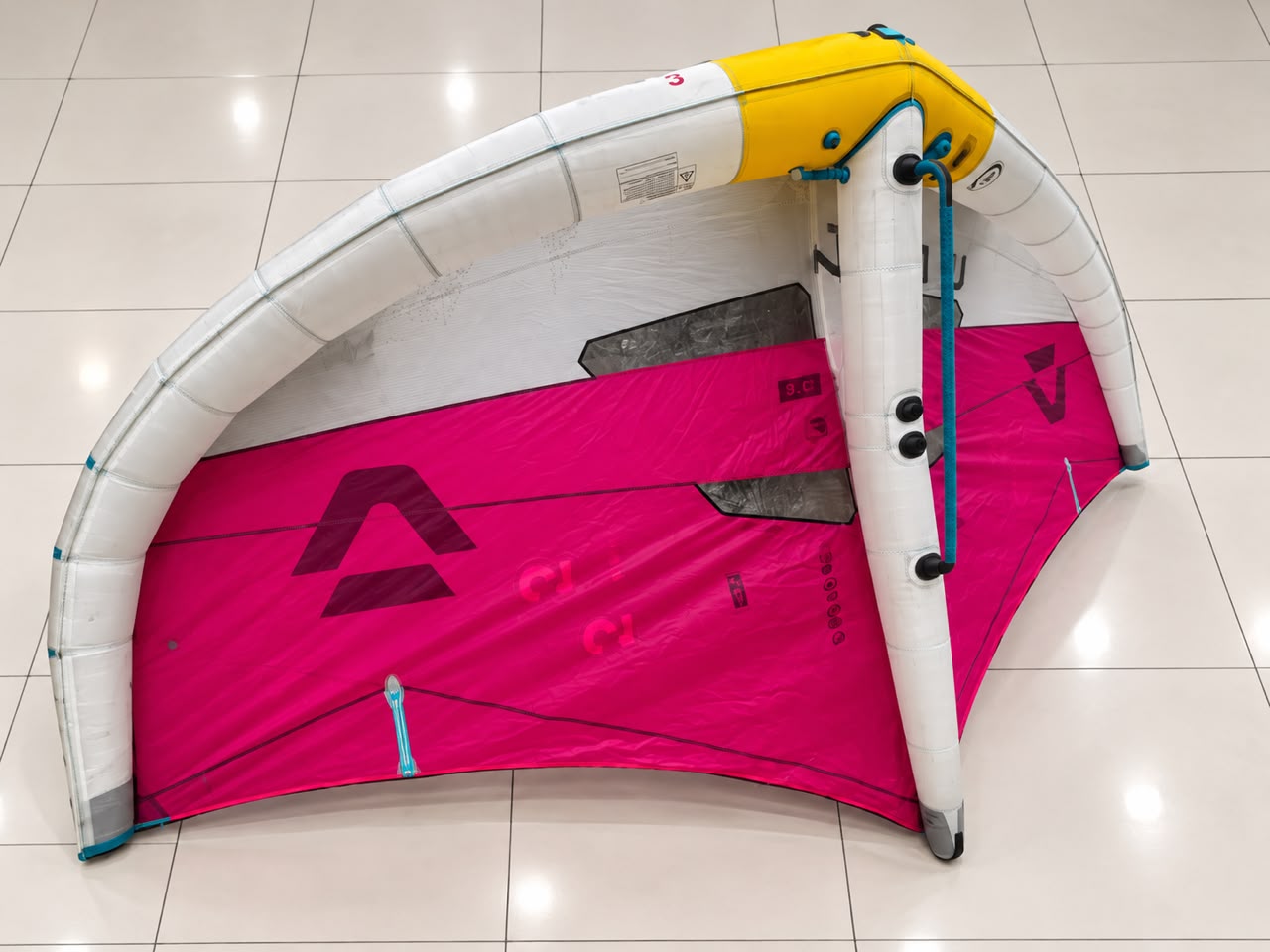
Duotone unit 5.5m SLS
€350.00
The Duotone Unit 5.5m SLS is offered in excellent condition and has been professionally inspected to confirm its overall quality, condition, and readiness for use. The wing has been carefully checked and found to have no damage, no repairs, no tears, no cracks, and no significant defects. It has been well maintained and is ready for many more wing-foiling sessions and jumps.
Every component has been thoroughly inspected, including the canopy, leading edge, strut, handles, seams, inflation system, valves, connection points, and related hardware. All critical areas have been checked for cuts, tears, abrasion, impact damage, leaks, excessive wear, and previous repairs.
Included components:
- Duotone Unit 5.5m SLS wing
- Leading edge
- Strut
- Control handles
- Inflation system and valve
- Connection points
- Related hardware
- Storage bag, if included
No tears, cuts, repairs, or significant structural damage are present. The wing remains clean, solid, well maintained, and ready for immediate use.
The Duotone Unit 5.5m SLS is ready to use and ready for many more wing-foiling sessions and jumps again. It is an excellent option for freeride, carving, wave riding, transitions, pumping, and aerial progression. A complete pre-session inspection and correct inflation should always be performed before use.
Description
Duotone Unit 5.5m SLS – Responsive Wing Foiling Performance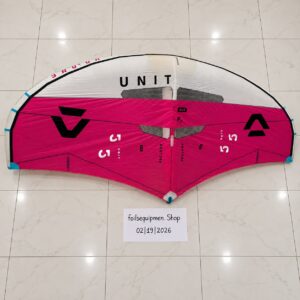
The Duotone Unit 5.5m SLS has been developed for riders seeking a responsive, lightweight, and performance-oriented wing for modern wing foiling. A refined construction is provided so that efficient power delivery, precise handling, and controlled maneuverability can be supported across a broad range of riding conditions
Furthermore, the 5.5 m² size can provide a practical balance between usable power and handling. Consequently, it can be incorporated into a multi-wing setup or selected as a versatile everyday size according to rider weight, board choice, foil configuration, and wind conditions.
The SLS designation is associated with Duotone’s performance-oriented construction approach. Therefore, the wing can be considered by riders who want reduced weight and responsive handling for freeride, jumping, carving, wave riding, and progression.
Lightweight SLS Construction
Weight can have a noticeable effect on wing handling, particularly during maneuvers and low-wind conditions. Therefore, lightweight construction is an important characteristic of the Duotone Unit 5.5m SLS.
A performance-focused material construction is used to reduce unnecessary weight while maintaining the structural support required during powered riding. Consequently, the wing can be repositioned efficiently during transitions, jumps, and maneuvers.
Moreover, reduced weight can allow the wing to feel more responsive when it is being moved overhead or repositioned during wave riding.
Key Product Highlights
- Duotone Unit 5.5m SLS
- 5.5 m² wing configuration
- SLS performance construction
- Lightweight handling
- Responsive steering
- Efficient power delivery
- Freeride versatility
- Wave-riding potential
- Carving capability
- Jumping and aerial progression
- Suitable for transitions
- Designed for performance-oriented wing foiling
- Suitable for riders developing advanced techniques
Responsive Handling
Fast and predictable handling is valuable when precise wing movements are required. Because of this, the Duotone Unit 5.5m SLS can provide a direct and responsive feeling during active riding.
As the handles are used to reposition the wing, steering input can be transferred efficiently. Consequently, directional changes can be initiated with controlled movements.
Furthermore, responsive handling can be particularly useful during tacks, gybes, jumps, and wave riding.
Power Delivery
Effective power generation is required during takeoff and acceleration. Therefore, the Unit 5.5m SLS can be used when controlled and efficient power delivery is desired.
As the wing is positioned correctly in the wind window, usable pull can be generated. Consequently, the rider can accelerate onto the foil while maintaining control.
Moreover, power can be managed through wing positioning and rider technique as conditions change.
Actual performance will depend on rider weight, wind strength, foil size, board design, and riding ability.
Foil Takeoff
Early acceleration is an important part of wing foiling.
The wing can be positioned to generate forward drive while the rider builds speed on the board. Consequently, sufficient momentum can be developed for foil takeoff.
Once the foil has lifted from the water, the wing can be repositioned to maintain efficient power.
Furthermore, the 5.5 m² configuration can provide a useful middle-ground option for riders building a versatile wing quiver.
Freeride Performance
Freeride riding requires a combination of control, acceleration, maneuverability, and comfort.
Therefore, the Duotone Unit 5.5m SLS can be incorporated into everyday freeride sessions where reliable handling is desired.
Cruising, carving, transitions, and moderate jumps can be combined during a single session. Consequently, the wing can remain useful as rider objectives change.
Moreover, the lightweight construction can make repeated wing repositioning less demanding.
Carving and Turning
Carving requires coordinated movement between the wing, board, foil, and rider.
As the rider enters a turn, the wing can be repositioned to maintain an appropriate power level. Consequently, smoother and more controlled carving can be developed.
Furthermore, responsive wing handling can allow smaller corrections to be made while the rider remains focused on the foil and board.
Wave Riding
Wave riding places different demands on a wing compared with powered freeriding.
Once wave energy is being used, excessive wing pull may become undesirable. Therefore, the wing needs to be maneuverable enough to be repositioned quickly.
The Duotone Unit 5.5m SLS can be used in suitable wave conditions where responsive handling and efficient repositioning are required.
As the rider moves along the wave, the wing can be adjusted according to the changing riding line. Consequently, the wing can remain supportive without unnecessarily restricting movement.
Down-the-Line Riding
Down-the-line riding requires the wing to remain manageable while the rider follows the wave.
As the rider accelerates with the wave, the wing can be repositioned to reduce unwanted power. Consequently, greater attention can be placed on the wave face and foil.
Moreover, lightweight handling can be beneficial when the wing needs to be moved quickly between different positions.
Jumping Performance
Jumping is one of the most dynamic aspects of wing foiling.
Before takeoff, the wing can be positioned to provide appropriate lift and forward momentum. As the rider leaves the water, the wing can be controlled through the handles.
Consequently, aerial maneuvers can be developed progressively.
The lightweight characteristics of the Unit 5.5m SLS can be particularly valuable during jumps because rapid wing repositioning is often required.
Transitions
Transitions require accurate timing.
During a gybe, the wing can be moved while the rider changes direction. During a tack, the wing must be repositioned across the wind window while the rider moves around the board.
Consequently, responsive handling can contribute to smoother transitions.
Furthermore, the 5.5 m² size can provide a manageable balance between power and maneuverability for riders developing more advanced transition techniques.
Pumping and Low-Wind Handling
Wing pumping can be used to generate additional board speed when appropriate conditions are present.
The wing can be moved rhythmically while the rider coordinates body and board movement. Consequently, forward momentum can be maintained or increased.
Because reduced wing weight can make repositioning easier, the SLS construction can be useful during active pumping.
However, the ability to ride in lighter wind will vary considerably according to rider weight, foil size, board volume, and technical ability.
Rider Progression
The Duotone Unit 5.5m SLS can support several stages of wing-foiling development.
Intermediate Riders
Controlled cruising, basic gybes, tacks, carving, and foil takeoffs can be developed.
Advanced Riders
Jumping, stronger carving, wave riding, and more technical transitions can be introduced.
Experienced Riders
Down-the-line wave riding, advanced aerial maneuvers, aggressive carving, and performance-oriented foil riding can be explored.
Therefore, the wing can remain useful as rider ability continues to develop.
Board and Foil Selection
The wing should always be considered as part of the complete wing-foil system.
A larger foil can provide additional lift and earlier takeoff, while a smaller foil can provide higher-speed handling.
Similarly, a larger board can provide greater stability, while a smaller board can offer a more dynamic feel.
Consequently, the Duotone Unit 5.5m SLS should be matched with board and foil equipment appropriate to rider weight, wind conditions, and intended discipline.
Wind Range Considerations
The appropriate wind range will vary considerably according to the rider and complete equipment configuration.
Lighter riders may become powered earlier, while heavier riders may require stronger wind.
Foil area, board volume, riding technique, and local wind consistency will also influence practical use.
Therefore, no single wind range should be assumed for every rider.
Maintenance and Care
Regular inspection should be performed before every session.
Particular attention should be given to:
- Canopy fabric
- Leading edge
- Strut
- Seams
- Handles
- Inflation valve
- Connection points
- Bridle or attachment areas, where applicable
- Signs of abrasion
- Signs of impact or damage
After salt-water use, appropriate rinsing should be performed. Furthermore, the wing should be completely dried before storage.
Sharp objects, excessive heat, prolonged ultraviolet exposure, and unnecessary compression should be avoided.
Any tear, damaged seam, valve problem, or structural concern should be professionally inspected before the wing is returned to use.
Main Benefits at a Glance
- Duotone Unit 5.5m SLS
- 5.5 m² configuration
- Lightweight SLS construction
- Responsive handling
- Efficient power delivery
- Freeride capability
- Wave-riding potential
- Down-the-line applications
- Carving performance
- Jumping potential
- Smooth transition handling
- Pumping potential
- Suitable for rider progression
Why Choose the Duotone Unit 5.5m SLS?
The Duotone Unit 5.5m SLS has been designed for riders who want a combination of lightweight handling, responsive steering, and versatile wing-foiling performance.
Power can be generated efficiently for takeoff and freeriding, while responsive handling can support carving, transitions, jumps, and wave riding.
Furthermore, the 5.5 m² size can provide a useful option within a multi-wing quiver, particularly for riders seeking a balance between power and maneuverability.
A Versatile Performance Wing
The Duotone Unit 5.5m SLS provides a performance-oriented option for modern wing foiling.
Lightweight construction can make the wing easier to reposition, while responsive handling can support precise rider input. Meanwhile, efficient power delivery can be used for freeride cruising, foil takeoffs, carving, jumping, and wave riding.
For riders seeking a Duotone Unit 5.5m SLS 5.5 m² wing for freeride, carving, wave riding, jumping, transitions, pumping, and advanced wing-foil progression, this wing provides a versatile platform for demanding sessions on the water.
Duotone Unit 5.5m SLS – Advanced Wing Foiling Performance
Designed for Dynamic Riding
More responsive handling is required as wing foiling becomes more technical. Therefore, the Duotone Unit 5.5m SLS can be used by riders who want a lightweight wing for freeride, carving, wave riding, jumping, and advanced progression.
A 5.5 m² configuration is provided, creating a practical balance between power and maneuverability. Consequently, the wing can be incorporated into a multi-wing quiver where changing wind conditions are regularly encountered.
Furthermore, the SLS construction is intended to provide a performance-focused combination of reduced weight and structural efficiency.
Lightweight Handling
Wing weight can have a noticeable effect on maneuverability.
As the wing is moved from one side of the board to the other, less weight can make repositioning feel more responsive. Consequently, transitions and aerial maneuvers can be performed with greater efficiency.
Moreover, reduced weight can be especially useful during wave riding, where the wing may need to be repositioned quickly.
Efficient Power Management
Controlled power management is essential when wind strength changes.
As the wing is positioned into the wind, usable forward drive can be generated. Consequently, board speed can be increased until sufficient momentum has been developed for foil takeoff.
Once the rider is flying, the wing can be repositioned to maintain the desired amount of pull.
Therefore, the Duotone Unit 5.5m SLS can be used across a broad range of powered riding techniques when appropriately matched to the rider and equipment.
Foil Takeoff
Efficient takeoff requires coordination between wing power, board speed, foil lift, and rider positioning.
As the wing generates forward drive, the board can accelerate across the water. Consequently, the foil can begin generating enough lift for takeoff.
Once flight has been established, the wing can be adjusted to maintain stable power.
Furthermore, rider technique and foil selection can have a significant effect on the minimum wind required for takeoff.
Freeride Cruising
Freeride sessions can be supported through the combination of manageable power and responsive handling.
The Unit 5.5m SLS can be used for cruising, acceleration, carving, transitions, and moderate jumping.
Consequently, the wing can remain useful when a single session includes several riding styles.
Moreover, the lightweight design can reduce fatigue when the wing is being actively repositioned.
Carving and S-Turns
Carving requires coordination between foil pressure, board direction, and wing position.
As a turn is initiated, the wing can be moved to support the new direction. Consequently, smooth S-turns and linked carving movements can be developed.
Furthermore, responsive handling can make smaller corrections easier during tighter turns.
Advanced carving should be developed progressively, particularly when speed and foil height are increased.
Wave Riding
Wave riding can place different demands on wing handling.
Once wave energy becomes the primary source of propulsion, the wing may need to be depowered and repositioned quickly.
The Duotone Unit 5.5m SLS can be used for suitable wave sessions where responsive handling is desired.
As the rider moves along the wave, the wing can be repositioned according to the wave’s direction and speed. Consequently, unwanted pull can be minimized while useful control is maintained.
Down-the-Line Riding
Down-the-line riding requires the wing to remain manageable while the rider follows the wave.
As speed is generated by the wave, the wing can be positioned away from the strongest power zone. Consequently, the rider can concentrate more heavily on the wave face and foil.
Moreover, lightweight handling can be beneficial when rapid repositioning is required.
Jumping and Aerial Maneuvers
Jumping requires precise timing between the wing, board, foil, and rider.
Before takeoff, sufficient speed can be established while the wing is positioned appropriately. As the rider leaves the water, the wing can be controlled through its handles.
Consequently, aerial movements can be developed with appropriate technique.
The 5.5m SLS can be useful for riders who want a wing that remains manageable while being moved during jumps.
Transition Performance
Smooth transitions depend on timing and wing control.
During a gybe, the wing can be moved while the rider changes direction. During a tack, the wing must be repositioned as the rider crosses the board.
Consequently, responsive handling can support cleaner transitions.
Furthermore, repeated practice can improve coordination between wing movement and foil control.
Wing Pumping
Pumping can be used to maintain momentum when wind power is marginal or when additional acceleration is desired.
The wing can be moved rhythmically while the rider coordinates movement through the board and foil.
Consequently, forward speed can be maintained more efficiently when appropriate technique is used.
Because the SLS construction is focused on reduced weight, active wing movement can be made more manageable.
Low-Wind Considerations
A 5.5 m² wing can provide useful performance in moderate conditions, although the practical wind range will vary considerably.
Rider weight, foil size, board volume, wing technique, and local wind consistency will all influence takeoff and sustained flight.
Therefore, the wing should not be assigned one universal wind range.
A larger wing may be more appropriate in lighter conditions, while a smaller wing can be selected when wind strength increases.
High-Wind Control
As wind strength increases, control becomes increasingly important.
The wing can be depowered through appropriate positioning and rider technique. Consequently, excessive pull can be reduced when conditions become stronger.
However, riders should always remain within the recommended operating conditions of their equipment.
Furthermore, appropriate wing size should be selected according to rider weight and experience.
Board Compatibility
The Duotone Unit 5.5m SLS can be paired with different board types depending on the intended discipline.
A larger board can provide increased stability during takeoff and learning. Conversely, a smaller board can provide a more dynamic feel for experienced riders.
Therefore, board selection should be made according to rider ability, foil size, water conditions, and desired performance.
Foil Selection
Foil size can significantly influence the performance of a 5.5 m² wing.
A larger front wing can provide more lift and earlier takeoff. Meanwhile, a smaller front wing can provide greater speed and maneuverability.
Consequently, the wing should be considered alongside the foil rather than selected independently.
Rider Progression
The Duotone Unit 5.5m SLS can support progression across multiple riding levels.
Intermediate Riders
Stable foil takeoffs, cruising, gybes, basic tacks, and controlled carving can be developed.
Advanced Riders
Jumps, stronger carving, wave riding, and faster transitions can be introduced.
Experienced Riders
Advanced aerial maneuvers, down-the-line wave riding, technical transitions, and performance-oriented foil riding can be explored.
Therefore, the wing can remain useful as riding ability develops.
Safety and Pre-Session Inspection
A complete inspection should be performed before every session.
Particular attention should be given to:
- Leading edge
- Strut
- Canopy
- Seams
- Handles
- Inflation system
- Valves
- Attachment points
- Signs of abrasion
- Signs of impact
Any tear, damaged seam, valve problem, or structural concern should be professionally assessed before the wing is used.
Furthermore, inflation pressure should be maintained according to the manufacturer’s recommendations.
Maintenance and Storage
After salt-water exposure, the wing should be rinsed appropriately and dried completely.
Storage should be performed in a clean, dry environment away from excessive heat and prolonged direct sunlight.
Sharp objects and abrasive surfaces should be avoided. Moreover, unnecessary folding, compression, or dragging should be prevented.
Consequently, the wing’s materials can be better protected during regular use.
Key Performance Advantages
- Duotone Unit 5.5m SLS
- 5.5 m² size
- Lightweight SLS construction
- Responsive handling
- Efficient power delivery
- Freeride capability
- Carving performance
- Wave-riding potential
- Down-the-line applications
- Jumping capability
- Transition performance
- Pumping potential
- Multi-wing quiver versatility
- Suitable for rider progression
Why Choose the Duotone Unit 5.5m SLS?
The Duotone Unit 5.5m SLS has been designed for riders who want a responsive and lightweight wing that can be used across several disciplines.
Freeride cruising can be combined with carving, jumping, transitions, and wave riding. Consequently, the wing can serve as a versatile component within a modern wing-foil setup.
Furthermore, the 5.5 m² configuration provides a useful balance between manageable power and responsive handling.
A Versatile Wing for Modern Foiling
The Duotone Unit 5.5m SLS provides a practical performance-oriented option for riders seeking lightweight handling and versatile control.
Efficient power can be generated for takeoff, while responsive steering can support carving, transitions, jumping, and wave riding. Meanwhile, the SLS construction can make active wing handling more manageable.
For riders seeking a Duotone Unit 5.5m SLS 5.5 m² wing for freeride, foil takeoffs, carving, wave riding, jumping, transitions, pumping, and advanced wing-foiling progression, this wing provides a capable platform for demanding sessions on the water.

Reviews
There are no reviews yet.