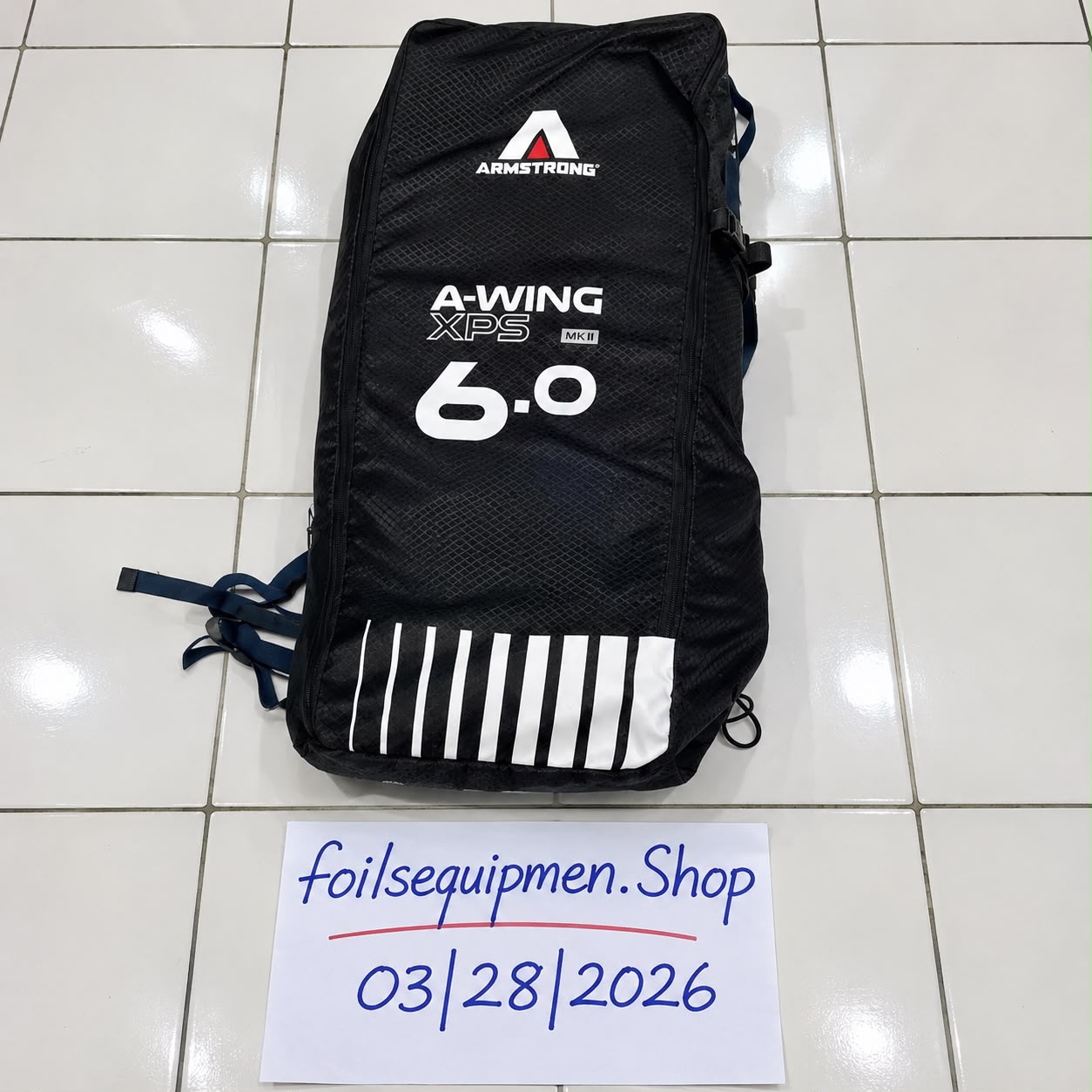
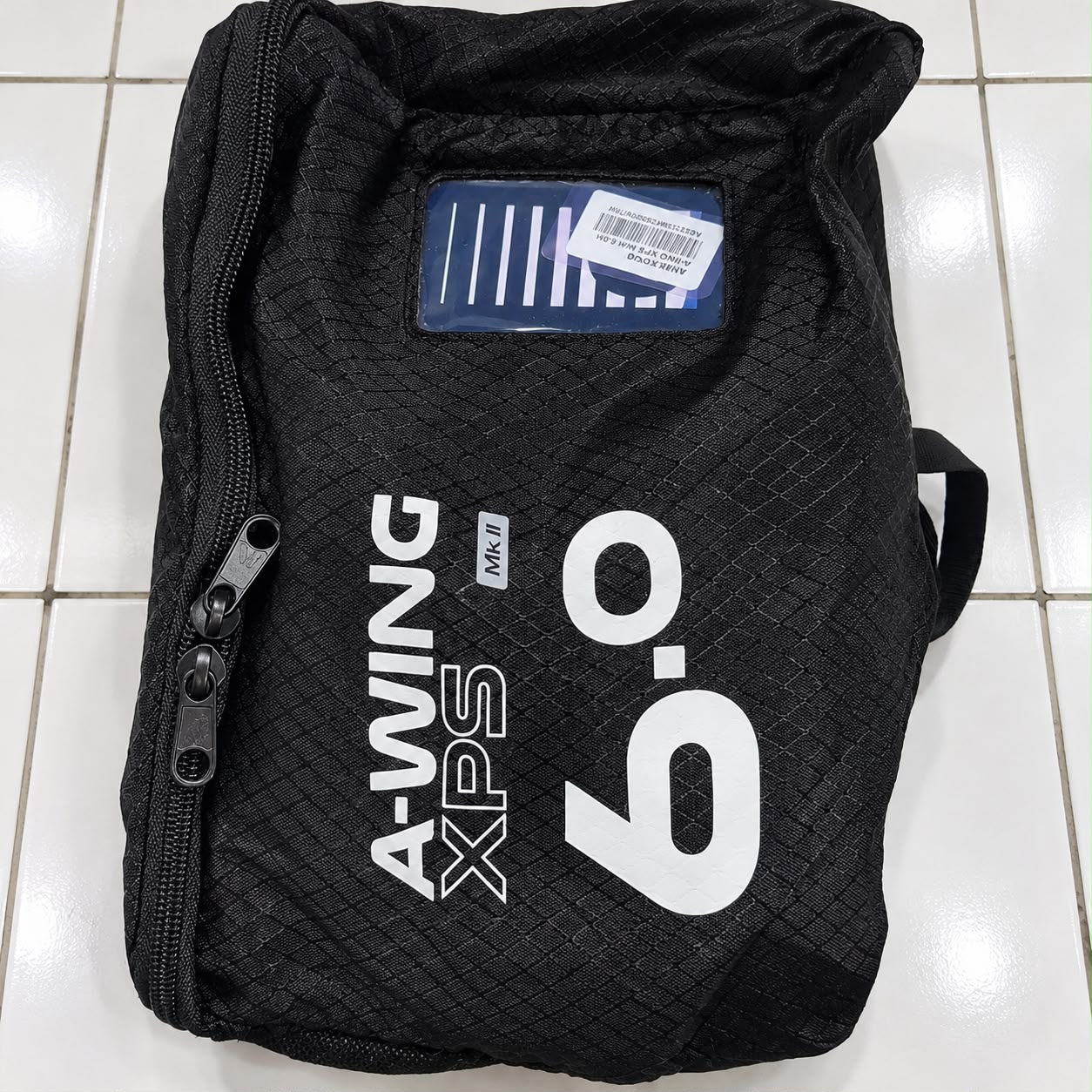
Armstrong A-Wing XPS MKII 6.0m
€500.00
Armstrong A-Wing XPS MKII 6.0m – Excellent Condition | Professionally Inspected & Ready to Use
The Armstrong A-Wing XPS MKII 6.0m is offered in excellent condition, with its premium construction carefully maintained and preserved. A professional inspection is reported to have been completed, with no tears, punctures, structural damage, or previous repairs identified.
Furthermore, the canopy, inflatable airframe, and control system are described as clean and fully functional, with no reported air leaks, excessive wear, or modifications.
Components and Condition Details
- 6.0m² Canopy: Excellent condition, with no reported tears or punctures.
- Leading Edge: Clean, with no reported damage or leaks.
- Center Strut: Well maintained and structurally sound.
- Cross Panel Sail: No reported fabric deterioration.
- Inflatable Bladders: Reportedly inspected for air retention.
- Dyna-Link Handle System: Secure and fully functional.
- Carbon Handles: Excellent condition.
- Inflation Valve: Clean and operational.
- Wrist Leash: Included if confirmed.
- Carry Bag: Included if confirmed.
- Spare Battens: Included where available.
- Patch Kit: Included where confirmed.
No previous repairs, tears, punctures, or structural modifications have been reported.
Professionally inspected, ready to inflate, ready to use, and ready to ride, foil, and jump again, subject to final safety checks.
Excellent condition, premium Armstrong engineering, and outstanding performance potential!
Description
Armstrong A-Wing XPS MKII 6.0m – Premium Wing Foiling Performance, Advanced Sail Technology, and Exceptional Control
Armstrong A-Wing XPS MKII 6.0m – Advanced Wing Foiling Technology and Exceptional Performance
The Armstrong A-Wing XPS MKII 6.0m has been engineered to deliver an exceptional combination of powerful acceleration, outstanding stability, responsive handling, and premium wing-foiling performance. Through innovative Armstrong Foils engineering, advanced canopy construction, and carefully refined aerodynamic geometry, an impressive riding experience has been developed
Furthermore, the second-generation XPS platform has been designed to improve upwind efficiency, reduce unnecessary canopy distortion, and support dependable control across a wide range of suitable riding conditions.
Consequently, smooth freeride cruising, dynamic wave riding, freestyle progression, and recreational performance sessions can be enjoyed.
Unlike traditional inflatable wings where canopy deformation may reduce responsiveness, the XPS MKII has been developed around an advanced Cross Panel Sail Design.
Additionally, the redesigned airframe has been optimized to provide improved stability during changing wind conditions.
Through the innovative Dyna-Link handle system, versatile control configurations have been introduced.
Whether light-wind wing foiling, performance freeriding, wave riding, or technical maneuvering is preferred, exceptional versatility can be experienced.
Premium 6.0m² Canopy for Efficient Power Generation
A generous 6.0 m² sail area has been incorporated to provide effective wind propulsion.
Through this carefully selected surface area, controlled acceleration can be encouraged.
Furthermore, useful low-end power has been prioritized.
Consequently, efficient hydrofoil takeoffs can be supported when suitable board, foil, and wind conditions are available.
Redesigned Airframe for Improved Stability
A refined lower-aspect airframe has been incorporated into the XPS MKII platform.
Through this redesigned structure, improved stability during gusts has been prioritized.
Additionally, efficient upwind movement can be supported.
As a result, predictable handling and comfortable wing control can be encouraged.
Cross Panel Sail Design – Advanced Canopy Technology and Responsive Performance
Innovative Panel Orientation
An advanced Cross Panel Sail Design has been developed to improve aerodynamic performance.
Through carefully arranged canopy panels, load distribution has been optimized.
Furthermore, unnecessary sail distortion can be reduced.
Consequently, a more consistent wing profile can be maintained under suitable wind loads.
Improved Canopy Rigidity
Through the refined panel architecture, structural support across the canopy has been emphasized.
Additionally, unwanted deformation can be minimized during powered riding.
As a result, dependable control and responsive handling can be encouraged.
Efficient Wind Power Distribution
During wing-foiling sessions, wind forces must be distributed effectively across the sail.
Through the Cross Panel Sail layout, balanced loading can be supported.
Furthermore, effective power delivery has been prioritized.
Consequently, controlled acceleration and improved rider confidence can be encouraged.
Dyna-Link Handle System – Advanced Ergonomics and Versatile Control
Innovative Interchangeable Handle Technology
The Dyna-Link system has been developed to accommodate different control preferences.
Through the interchangeable mounting architecture, compatible carbon handles or a carbon boom can be selected.
Furthermore, tool-free installation has been incorporated.
Consequently, practical equipment adjustments can be completed with greater convenience.
Premium Carbon Handles
Lightweight carbon handles have been included in the standard XPS MKII configuration.
Through their rigid construction, direct handling response can be supported.
Additionally, precise hand positioning can be encouraged.
As a result, responsive wing control can be achieved.
Optional Carbon Boom Configuration
For riders seeking alternative hand positioning, a compatible Armstrong carbon boom can be selected separately.
Through the continuous grip arrangement, different hand placements can be accommodated.
Furthermore, convenient transitions during advanced maneuvers may be supported.
Consequently, greater equipment versatility can be achieved.
Armstrong A-Wing XPS MKII 6.0m – Premium Features and Performance Highlights
The following advanced characteristics have been incorporated into this premium inflatable wing:
- 6.0m² Canopy Area: Efficient power generation and controlled acceleration have been prioritized.
- 339 cm Wingspan: Balanced aerodynamic performance and responsive handling have been emphasized.
- Approximately 2.85 kg Weight: Lightweight equipment handling has been supported.
- 11–20 Knot Published Wind Range: Versatile riding performance has been developed for suitable conditions.
- Cross Panel Sail Design: Canopy distortion has been reduced through refined load distribution.
- Advanced Canopy Construction: Consistent aerodynamic performance has been prioritized.
- Lower-Aspect Airframe: Stability and controllable handling have been improved.
- Redesigned Leading Edge: Efficient aerodynamic structure has been emphasized.
- Double-Bend Strut: Improved ergonomic positioning has been incorporated.
- Dyna-Link Handle System: Interchangeable control configurations have been developed.
- Carbon Handles: Lightweight rigidity and precise handling have been prioritized.
- Optional Carbon Boom: Alternative grip positioning can be accommodated.
- Improved Upwind Efficiency: Controlled directional performance has been emphasized.
- Gust Stability: Predictable handling can be supported during changing wind conditions.
- Efficient Low-End Power: Controlled takeoffs can be encouraged.
- Freeride Versatility: Smooth cruising and responsive maneuverability have been supported.
- Wave-Riding Performance: Controlled transitions and responsive handling have been prioritized.
- Freestyle Potential: Technical riding progression can be explored.
- Premium Armstrong Engineering: Innovative construction and advanced aerodynamic design have been combined.
Light-Wind Wing Foiling – Efficient Power and Smooth Acceleration
Responsive Low-End Performance
During lighter wind conditions, efficient wind energy capture becomes particularly important.
Through the 6.0m² canopy, useful propulsion can be generated.
Furthermore, the refined airframe can support efficient power delivery.
Consequently, controlled board acceleration can be encouraged.
Smooth Hydrofoil Takeoffs
Before sustained hydrofoil flight can be established, sufficient board speed must be developed.
Through the wing’s aerodynamic construction, effective pulling power can be provided.
Additionally, suitable pumping technique can contribute to acceleration.
As a result, smooth takeoffs can be supported when appropriate hydrofoil equipment has been selected.
Efficient Cruising Performance
For recreational wing-foiling enthusiasts, comfortable handling and dependable propulsion are essential.
Through the redesigned airframe, predictable control has been emphasized.
Furthermore, unwanted canopy deformation can be reduced.
Consequently, enjoyable cruising can be experienced.
Freeride Wing Foiling – Smooth Handling and Dynamic Performance
Comfortable Wing Control
During extended sessions, rider comfort becomes particularly important.
Through the refined double-bend strut, natural arm positioning has been prioritized.
Additionally, unnecessary muscle fatigue may be reduced.
As a result, comfortable riding can be encouraged.
Responsive Directional Changes
During gybes, tacks, and other directional transitions, accurate control becomes essential.
Through the rigid carbon handles, direct rider input can be supported.
Furthermore, stable canopy behavior has been emphasized.
Consequently, smooth maneuvers can be achieved through appropriate technique.
Efficient Upwind Riding
During upwind sessions, aerodynamic efficiency and stable power delivery become especially valuable.
Through the redesigned lower-aspect airframe, improved upwind performance has been prioritized.
Additionally, controlled handling can be maintained during suitable wind conditions.
As a result, efficient directional progress can be encouraged.
Wave Riding – Responsive Control and Stable Handling
Smooth Wave-Oriented Performance
During wave-riding sessions, accurate wing positioning becomes particularly important.
Through the refined aerodynamic profile, predictable control can be supported.
Furthermore, the lightweight construction can improve handling convenience.
Consequently, responsive wave-oriented movement can be encouraged.
Controlled Transitions
When moving between powered riding and wave-driven gliding, smooth wing positioning may be required.
Through the redesigned airframe, consistent handling has been emphasized.
Additionally, direct carbon-handle feedback can be provided.
As a result, fluid riding transitions can be supported.
Freestyle Wing Foiling – Responsive Handling and Technical Progression
Direct Control During Maneuvers
For experienced freestyle riders, accurate wing response is essential.
Through the rigid handle construction, precise inputs can be transferred.
Furthermore, consistent canopy tension can support controlled movement.
Consequently, technical maneuvers can be approached with greater confidence.
Jumping and Aerial Performance
During jumping, suitable wind conditions, equipment strength, and rider technique must be considered.
Through responsive power delivery, dynamic freestyle movements can be supported.
Additionally, stable canopy behavior may assist with controlled wing positioning.
However, manufacturer limitations and appropriate safety procedures must always be respected.
Armstrong A-Wing XPS MKII 6.0m – Technical Specifications
| Specification | Details |
|---|---|
| Manufacturer | Armstrong Foils |
| Product | A-Wing XPS MKII |
| Wing Size | 6.0 m² |
| Wingspan | 339 cm |
| Published Weight | Approximately 2.85 kg |
| Published Wind Range | 11–20 Knots |
| Airframe Design | Redesigned Lower-Aspect Airframe |
| Canopy Technology | Cross Panel Sail Design |
| Handle System | Dyna-Link |
| Standard Handles | Carbon Handles |
| Optional Control | Carbon Boom |
| Compatible Boom Size | Large |
| Strut Design | Refined Double-Bend Strut |
| Primary Application | Wing Foiling |
| Additional Applications | Freeride, Wave Riding, Freestyle |
| Performance Focus | Power, Stability, Upwind Efficiency, Control |
Included Components and Recommended Accessories
Standard Armstrong Package
The following accessories are specified for the standard manufacturer’s package:
- A-Wing XPS MKII 6.0m: Premium inflatable wing.
- Carbon Handles: Direct handling and precise control are supported.
- Carry Bag: Convenient transportation and storage are provided.
- Wrist Leash: Wing retention can be supported.
- Spare Battens: Replacement components are provided.
- Patch Kit: Suitable minor repairs can be supported.
Recommended Additional Equipment
- Armstrong Carbon Boom: Alternative handle positioning can be achieved.
- Compatible Wing-Foil Board: Suitable flotation and mounting compatibility should be verified.
- Compatible Armstrong Hydrofoil: Efficient lift and glide can be supported.
- Suitable Inflation Pump: Correct operating pressure should be established according to manufacturer instructions.
- Protective Helmet: Impact protection should be prioritized.
- Impact Vest: Additional safety protection can be provided.
- Water-Suitable Protective Clothing: Appropriate thermal protection can be selected.
Maintenance and Long-Term Equipment Protection
Canopy Inspection
Before every session, the canopy should be examined for tears, punctures, stitching damage, and excessive wear.
Furthermore, the leading edge and strut should be inspected carefully.
Through regular checks, developing problems can be identified.
Inflation and Valve Maintenance
The inflation system should be maintained according to Armstrong recommendations.
Additionally, valves and bladder components should be inspected for air leakage.
Consequently, suitable operating pressure can be maintained.
Handle Connection Inspection
The Dyna-Link handle system should be checked before use.
Furthermore, compatible handles or boom attachments should be secured according to manufacturer instructions.
Through correct assembly, dependable control can be supported.
Saltwater Cleaning and Storage
Following saltwater sessions, accumulated salt and sand should be removed according to manufacturer guidance.
Additionally, the wing should be dried appropriately before prolonged storage.
Consequently, unnecessary material deterioration can be reduced.
Why Choose the Armstrong A-Wing XPS MKII 6.0m?
Exceptional Aerodynamic Engineering
Advanced Cross Panel Sail Design has been incorporated to improve canopy stability.
Through refined load distribution, unwanted deformation can be reduced.
Furthermore, consistent power delivery has been prioritized.
Consequently, responsive riding performance can be supported.
Premium Handling Versatility
An innovative interchangeable handle system has been introduced.
Through Dyna-Link technology, compatible carbon handles and a separate optional boom can be selected.
Additionally, practical configuration adjustments can be completed without mounting hardware.
As a result, greater control flexibility can be achieved.
Efficient Power and Stability
A 6.0m² canopy has been developed to provide useful power across suitable wind conditions.
Through the redesigned airframe, dependable handling has been emphasized.
Furthermore, improved upwind efficiency can be supported.
Consequently, enjoyable freeride and wave-oriented sessions can be experienced.
Final Thoughts – Experience Premium Armstrong Wing-Foiling Performance
The Armstrong A-Wing XPS MKII 6.0m has been engineered to combine advanced aerodynamic technology, responsive power delivery, refined handling, and premium construction.
Through the innovative Cross Panel Sail Design, canopy stability has been prioritized.
Furthermore, the redesigned lower-aspect airframe contributes to controlled performance during changing wind conditions.
Additionally, the Dyna-Link system provides versatile handle configuration options.
From light-wind freeriding to responsive wave riding and advanced freestyle progression, exceptional riding opportunities can be explored.
Choose the Armstrong A-Wing XPS MKII 6.0m for premium aerodynamic engineering, efficient power generation, dependable stability, responsive handling, and outstanding wing-foiling versatility.
Armstrong A-Wing XPS MKII 6.0m – Part 2: Advanced Aerodynamic Technology, Premium Construction, and Exceptional Wing-Foiling Performance
Armstrong A-Wing XPS MKII 6.0m – Premium Wing-Foiling Technology and Outstanding Riding Versatility
The Armstrong A-Wing XPS MKII 6.0m has been developed to provide an exceptional combination of advanced aerodynamic performance, responsive power delivery, dependable stability, and comfortable handling. Through innovative Armstrong Foils engineering, refined canopy construction, and carefully optimized structural geometry, a versatile performance platform has been created.
Furthermore, the second-generation design has been engineered to improve upwind efficiency and maintain predictable handling during changing wind conditions. Consequently, enjoyable freeride cruising, dynamic wave riding, freestyle progression, and recreational wing-foiling sessions can be supported.
Unlike traditional inflatable wings where significant canopy deformation may occur under demanding wind loads, the XPS MKII platform has been developed around an advanced Cross Panel Sail Design.
Additionally, the redesigned lower-aspect airframe has been optimized to improve stability and controlled power delivery.
Through the innovative Dyna-Link handle system, versatile grip configurations have been introduced.
Whether smooth cruising, technical maneuvers, wave riding, or light-wind progression is preferred, an impressive range of riding opportunities can be explored.
Premium Aerodynamic Construction
Advanced canopy materials have been incorporated into the wing’s structural design.
Through carefully engineered panel orientation, unwanted sail distortion can be reduced.
Furthermore, efficient load distribution has been prioritized.
Consequently, more consistent aerodynamic performance can be supported.
Refined 6.0m² Wing Geometry
A generous 6.0 m² sail area has been selected to provide useful propulsion.
Through the carefully optimized canopy shape, controlled acceleration can be encouraged.
Additionally, dependable low-end power has been emphasized.
As a result, efficient hydrofoil takeoffs can be supported in suitable wind conditions.
Advanced Cross Panel Sail Design – Improved Canopy Stability and Efficient Power Delivery
Precision-Oriented Canopy Panels
A refined panel arrangement has been developed to optimize aerodynamic loading.
Through strategically oriented fabric sections, wind forces can be distributed more effectively.
Furthermore, unnecessary material deformation can be minimized.
Consequently, predictable wing behavior can be encouraged.
Reduced Canopy Distortion
During powered riding, significant aerodynamic forces are transmitted across the sail.
Through the Cross Panel Sail Design, unwanted canopy movement can be reduced.
Additionally, a more consistent profile can be maintained.
As a result, responsive handling and efficient wind propulsion can be supported.
Improved Structural Rigidity
The advanced canopy arrangement has been developed to complement the redesigned airframe.
Through this combination, overall wing rigidity has been emphasized.
Furthermore, direct handling response can be encouraged.
Consequently, accurate rider inputs can be maintained during suitable maneuvers.
Efficient Power Distribution
During acceleration, wind pressure must be transferred effectively through the wing.
Through refined canopy geometry, controlled load distribution has been prioritized.
Additionally, consistent propulsion can be supported.
As a result, smoother acceleration and more predictable riding characteristics can be achieved.
Redesigned Airframe – Improved Stability and Comfortable Handling
Advanced Lower-Aspect Configuration
A redesigned lower-aspect airframe has been incorporated to provide improved control.
Through the refined geometry, stable handling during gusts has been prioritized.
Furthermore, efficient upwind performance has been emphasized.
Consequently, more predictable riding can be experienced.
Improved Gust Management
During changing wind conditions, sudden increases in wind pressure may be encountered.
Through the redesigned aerodynamic structure, controlled wing behavior can be supported.
Additionally, unwanted handling instability can be reduced.
As a result, greater riding confidence can be encouraged.
Refined Double-Bend Strut
A slightly double-bent center strut has been developed to improve rider ergonomics.
Through the refined handle positioning, more natural arm alignment can be encouraged.
Furthermore, unnecessary muscle fatigue may be reduced.
Consequently, comfortable handling can be supported during extended sessions.
Dyna-Link Handle System – Advanced Control and Practical Versatility
Innovative Interchangeable Control Technology
The Dyna-Link system has been developed to provide flexible handle configurations.
Through its interchangeable architecture, compatible carbon handles or an optional carbon boom can be selected.
Furthermore, tool-free assembly has been incorporated.
Consequently, convenient equipment adjustments can be achieved.
Premium Carbon Handle Construction
Lightweight carbon handles have been provided with the standard wing configuration.
Through the rigid construction, direct steering response can be supported.
Additionally, accurate hand placement can be maintained.
As a result, controlled riding and responsive maneuverability can be encouraged.
Optional Carbon Boom Compatibility
For riders seeking additional grip flexibility, a compatible Armstrong carbon boom can be selected separately.
Through the continuous grip arrangement, different hand positions can be accommodated.
Furthermore, practical transitions during technical maneuvers can be encouraged.
Consequently, more personalized handling characteristics can be achieved.
Armstrong A-Wing XPS MKII 6.0m – Advanced Features and Performance Highlights
The following premium characteristics have been incorporated into this performance-oriented inflatable wing:
- 6.0m² Sail Area: Efficient wind propulsion and controlled acceleration have been prioritized.
- 339 cm Wingspan: Balanced aerodynamic performance and responsive handling have been emphasized.
- Approximately 2.85 kg Weight: Practical equipment handling has been supported.
- 11–20 Knot Published Wind Range: Versatile riding performance has been developed for suitable conditions.
- Cross Panel Sail Design: Canopy deformation has been reduced through optimized load distribution.
- Advanced Canopy Construction: Stable aerodynamic characteristics have been prioritized.
- Redesigned Lower-Aspect Airframe: Improved gust stability has been emphasized.
- Refined Leading Edge: Consistent structural support has been incorporated.
- Double-Bend Center Strut: Improved ergonomic positioning has been prioritized.
- Dyna-Link Handle System: Interchangeable grip configurations have been developed.
- Carbon Handles: Direct control and structural rigidity have been supported.
- Optional Carbon Boom: Greater hand-positioning flexibility can be achieved.
- Improved Upwind Performance: Efficient directional movement has been prioritized.
- Responsive Low-End Power: Controlled foil takeoffs can be encouraged.
- Stable Gust Handling: Predictable wing behavior can be supported.
- Comfortable Grip Positioning: Reduced arm fatigue can be encouraged.
- Freeride Versatility: Smooth cruising and responsive maneuverability have been supported.
- Wave-Riding Potential: Controlled transitions and stable handling have been emphasized.
- Freestyle Performance: Technical maneuvering can be explored.
- Premium Armstrong Engineering: Advanced aerodynamic technology and refined structural design have been combined.
Light-Wind Wing Foiling – Efficient Acceleration and Controlled Takeoffs
Effective Wind Energy Capture
During lighter wind conditions, available propulsion must be used efficiently.
Through the generous 6.0m² canopy, useful pulling power can be generated.
Furthermore, the refined aerodynamic profile supports efficient wind loading.
Consequently, controlled board acceleration can be encouraged.
Smooth Hydrofoil Engagement
Before sustained hydrofoil flight can be established, adequate board speed must be achieved.
Through the wing’s responsive power delivery, forward acceleration can be supported.
Additionally, appropriate pumping technique can contribute to efficient takeoffs.
As a result, smoother foil engagement may be achieved when suitable equipment has been selected.
Efficient Light-Wind Cruising
During recreational sessions, predictable power and comfortable handling are especially valuable.
Through the redesigned airframe, consistent wing behavior has been prioritized.
Furthermore, unnecessary canopy distortion can be reduced.
Consequently, enjoyable cruising can be supported.
Freeride Wing Foiling – Exceptional Stability and Responsive Handling
Comfortable Long-Distance Cruising
During extended wing-foiling sessions, efficient movement and rider comfort become important.
Through the refined strut geometry, natural arm positioning can be encouraged.
Furthermore, consistent power delivery has been emphasized.
As a result, comfortable freeride performance can be achieved.
Smooth Directional Transitions
During gybes and tacks, wing positioning must be adjusted accurately.
Through the rigid carbon handles, direct steering feedback can be provided.
Additionally, predictable canopy behavior can support smooth transitions.
Consequently, controlled directional changes can be encouraged.
Efficient Upwind Progress
During upwind riding, effective aerodynamic performance becomes particularly valuable.
Through the redesigned lower-aspect airframe, improved upwind efficiency has been prioritized.
Furthermore, stable wing handling can be maintained in suitable conditions.
As a result, efficient directional movement can be supported.
Wave Riding – Controlled Wing Positioning and Dynamic Performance
Responsive Wave-Oriented Control
During wave riding, rapid changes in direction may be required.
Through the refined aerodynamic structure, responsive handling can be encouraged.
Additionally, the lightweight wing configuration can simplify positioning.
Consequently, smooth wave-oriented movement can be supported.
Stable Flagged-Out Handling
During wave-driven gliding, the wing may be held in a neutral position to reduce propulsion.
Through the refined airframe, controlled wing positioning can be encouraged.
Furthermore, suitable rider technique can help maintain balance.
As a result, more comfortable wave-focused riding may be experienced.
Smooth Powered-to-Gliding Transitions
During transitions between powered riding and wave-driven movement, accurate wing handling becomes essential.
Through the rigid handle configuration, direct control can be supported.
Additionally, the refined canopy design can contribute to predictable response.
Consequently, fluid riding transitions can be encouraged.
Freestyle Wing Foiling – Responsive Maneuverability and Advanced Progression
Precise Control During Technical Maneuvers
For experienced freestyle riders, responsive equipment handling is especially important.
Through the carbon handle construction, accurate grip inputs can be transferred.
Furthermore, consistent aerodynamic loading has been emphasized.
Consequently, technical maneuvers can be approached with greater control.
Jumping and Aerial Maneuvers
During jumping, suitable equipment condition, wind strength, rider skill, and environmental conditions must be considered.
Through responsive power delivery, dynamic maneuvers can be supported.
Additionally, predictable wing positioning can assist with controlled movement.
However, manufacturer recommendations and appropriate safety limitations should always be respected.
Controlled Landing Preparation
During aerial maneuvers, wing positioning must be managed carefully.
Through the rigid handle system, accurate adjustments can be encouraged.
Furthermore, appropriate rider technique can contribute to controlled landings.
Consequently, safer freestyle progression can be supported.
Armstrong A-Wing XPS MKII 6.0m – Technical Specifications
| Specification | Details |
|---|---|
| Manufacturer | Armstrong Foils |
| Model | A-Wing XPS MKII |
| Size | 6.0 m² |
| Wingspan | 339 cm |
| Published Weight | Approximately 2.85 kg |
| Recommended Wind Range | 11–20 Knots |
| Airframe | Redesigned Lower-Aspect Structure |
| Canopy Technology | Cross Panel Sail Design |
| Handle Technology | Dyna-Link |
| Standard Handles | Carbon Handles |
| Optional Handle Configuration | Carbon Boom |
| Compatible Boom Size | Large |
| Strut | Refined Double-Bend Design |
| Primary Application | Wing Foiling |
| Additional Applications | Freeride, Wave Riding, Freestyle |
| Performance Characteristics | Power, Stability, Control, Upwind Efficiency |
| Standard Accessories | Carry Bag, Wrist Leash, Spare Battens, Patch Kit |
Standard Package Components and Recommended Equipment
Premium Carbon Handles
A set of compatible carbon handles has been included in the standard configuration.
Through the rigid design, dependable grip response can be supported.
Furthermore, efficient control can be maintained during powered riding.
Carry Bag
A suitable carry bag has been provided to support equipment transportation and storage.
Through proper packing, unnecessary contact damage can be minimized.
Additionally, convenient equipment organization can be achieved.
Wrist Leash
A compatible wrist leash has been supplied for equipment retention.
Through appropriate attachment, accidental separation from the wing can be reduced.
Furthermore, safe riding practices should always be followed.
Spare Battens and Patch Kit
Replacement battens and a patch kit have been included in the manufacturer’s standard package.
Through these accessories, appropriate minor maintenance can be supported.
However, significant structural or bladder damage should be assessed and repaired according to manufacturer guidance.Armstrong A-Wing XPS MKII 6.0m
Additional Recommended Accessories
- Armstrong Carbon Boom: Alternative grip positioning can be provided.
- Compatible Wing-Foil Board: Appropriate flotation and stability can be established.
- Compatible Hydrofoil Assembly: Efficient lift and glide can be supported.Armstrong A-Wing XPS MKII 6.0m
- Suitable Inflation Pump: Correct wing inflation can be achieved.Armstrong A-Wing XPS MKII 6.0m
- Protective Helmet: Impact protection should be prioritized.Armstrong A-Wing XPS MKII 6.0m
- Impact Vest: Additional personal protection can be provided.Armstrong A-Wing XPS MKII 6.0m
- Appropriate Wetsuit: Thermal comfort can be improved.Armstrong A-Wing XPS MKII 6.0m
- Suitable Equipment Storage Bag: Practical transportation can be supported.Armstrong A-Wing XPS MKII 6.0m
Long-Term Maintenance and Equipment Protection
Canopy Inspection
Before every session, the canopy should be examined for punctures, tears, stitching damage, and excessive wear.Armstrong A-Wing XPS MKII 6.0m
Furthermore, the panel seams should be inspected carefully.Armstrong A-Wing XPS MKII 6.0m
Through regular checks, developing material concerns can be identified.Armstrong A-Wing XPS MKII 6.0m
Airframe Inspection
The leading edge and center strut should be inspected for leakage and structural damage.
Additionally, inflation pressure should be checked against manufacturer instructions.Armstrong A-Wing XPS MKII 6.0m
Consequently, appropriate airframe performance can be maintained.Armstrong A-Wing XPS MKII 6.0m
Dyna-Link Connection Maintenance
The handle system should be inspected before use.Armstrong A-Wing XPS MKII 6.0m
Furthermore, compatible handles or boom components should be secured according to Armstrong’s instructions.Armstrong A-Wing XPS MKII 6.0m
Through proper assembly, dependable control can be supported.
Saltwater Cleaning
Following saltwater sessions, accumulated sand and salt should be removed according to manufacturer guidance.Armstrong A-Wing XPS MKII 6.0m
Additionally, the wing should be dried before prolonged storage.Armstrong A-Wing XPS MKII 6.0m
Consequently, unnecessary deterioration can be minimized.Armstrong A-Wing XPS MKII 6.0m
Protective Storage
The wing should be stored according to Armstrong’s folding and packing recommendations.
Furthermore, sharp objects, excessive heat, and unnecessary pressure should be avoided.
Through responsible storage, equipment condition can be preserved.Armstrong A-Wing XPS MKII 6.0m
Why Choose the Armstrong A-Wing XPS MKII 6.0m?
Premium Aerodynamic Performance
Advanced Cross Panel Sail Design has been incorporated to improve canopy stability.Armstrong A-Wing XPS MKII 6.0m
Through optimized load distribution, unwanted distortion can be minimized.Armstrong A-Wing XPS MKII 6.0m
Furthermore, efficient power delivery has been prioritized.Armstrong A-Wing XPS MKII 6.0m
Consequently, responsive wing performance can be supported.Armstrong A-Wing XPS MKII 6.0m
Exceptional Handling Versatility
An innovative Dyna-Link system has been developed to accommodate different grip preferences.
Through interchangeable carbon handles and optional boom compatibility, personalized configurations can be achieved.Armstrong A-Wing XPS MKII 6.0m
Additionally, practical installation has been prioritized.Armstrong A-Wing XPS MKII 6.0m
Dependable Power and Stability
The 6.0m² canopy has been designed to provide useful propulsion across suitable wind conditions.
Through the redesigned airframe, controlled handling has been emphasized.
Furthermore, efficient upwind movement can be encouraged.Armstrong A-Wing XPS MKII 6.0m
Consequently, versatile wing-foiling performance can be experienced.Armstrong A-Wing XPS MKII 6.0m
Final Thoughts – Experience Advanced Armstrong Wing-Foiling Technology
The Armstrong A-Wing XPS MKII 6.0m has been engineered to combine premium aerodynamic construction, dependable power delivery, comfortable handling, and advanced wing-foiling versatility.Armstrong A-Wing XPS MKII 6.0m
Through Cross Panel Sail Design, improved canopy stability has been prioritized.
Furthermore, the redesigned lower-aspect airframe supports predictable handling during changing wind conditions.Armstrong A-Wing XPS MKII 6.0m
Additionally, the Dyna-Link system provides convenient control customization.
From light-wind freeriding to wave-oriented performance and advanced freestyle progression, exciting riding possibilities can be explored.Armstrong A-Wing XPS MKII 6.0m
Choose the Armstrong A-Wing XPS MKII 6.0m for advanced aerodynamic engineering, exceptional control, responsive power delivery, efficient upwind performance, and premium wing-foiling versatility.

Reviews
There are no reviews yet.