


1500 Seven Seas V2
€350.00
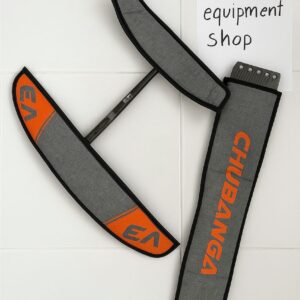
The 1500 Seven Seas V2 is offered in excellent condition and has been professionally inspected to ensure it is ready for many more foil sessions, jumps, carving, pumping, and adventures on the water. It has been carefully examined and has been confirmed to have no cracks, dents, tears, structural damage, or repair work. The complete component has been well maintained and handled with care.
Every major area has been thoroughly inspected, including the front wing, leading edge, wing tips, mounting surfaces, connection points, and included hardware. No cracks, significant damage, repairs, or structural concerns have been identified. The foil remains clean, well preserved, and ready to be used again.
Included components:
- 1500 Seven Seas V2 front wing
- Mounting and connection hardware
- Compatible fittings and screws, where included
- Protective foil cover or bag, where included
- Other original accessories supplied with the item
The 1500 Seven Seas V2 is ready to use and can be taken directly to the water for new wingfoil sessions, jumps, carving, pumping, freeride, wave riding, and foil adventures. It has been professionally inspected and carefully maintained, making it ready for many more rides and enjoyable sessions.
Description
1500 Seven Seas V2 – Versatile Foil Performance, Glide, and Stability
Advanced Foiling Performance for Smooth Progression
The 1500 Seven Seas V2 has been designed for riders who want efficient lift, smooth glide, predictable handling, and versatile foil performance. Through its generous surface area and refined foil profile, controlled takeoffs can be achieved while useful stability is maintained during flight.
Because a 1500 cm² configuration provides substantial lift, the setup can be particularly useful when early takeoff and efficient low-speed performance are being prioritized. Furthermore, the Seven Seas concept is suited to riders who want to connect stability with glide and maneuverability across different foil disciplines
Whether wingfoiling, freeride foiling, pumping, carving, or exploring light-wind conditions is being pursued, the 1500 Seven Seas V2 can provide a capable platform for progressive riding.
Product Highlights
- Model: Seven Seas V2
- Front Wing Size: 1500 cm²
- Category: Performance foil front wing
- Performance focus: Lift, glide, stability, maneuverability, and progression
- Suitable applications: Wingfoil, freeride, carving, pumping, and low-speed foiling
- Riding character: Smooth, stable, efficient, and responsive
- Ideal for: Riders seeking accessible lift with strong glide potential
1500 cm² Front Wing Configuration
The 1500 Seven Seas V2 has been designed around a larger surface area that provides substantial lift at comparatively lower speeds. Consequently, takeoff can be achieved more easily when compared with smaller, speed-focused foil configurations.
The additional surface area can be especially valuable for riders who want:
- Earlier takeoffs
- Controlled low-speed flight
- Stable cruising
- Efficient pumping
- Smooth transitions
- Light-wind versatility
Furthermore, the larger configuration can provide a comfortable platform for riders developing greater confidence in foil control.
Smooth and Stable Flight
Stability is an important characteristic when foil progression is being pursued. The Seven Seas V2 1500 has been designed to provide a predictable flight experience while allowing useful maneuverability to be retained.
When rider weight is shifted across the board, controlled feedback can be provided. Additionally, the larger wing area can help maintain lift when speed decreases.
As a result, riders can spend more time concentrating on technique and less time recovering from unstable flight.
Early Takeoff Performance
The 1500 Seven Seas V2 can be particularly useful when early takeoff is desired.
Because substantial lift is generated by the larger surface area, the foil can be brought onto flight at relatively lower speeds. Therefore, riders can take advantage of lighter or moderate wind conditions when the complete equipment setup is appropriately matched.
This characteristic can be valuable for:
Wingfoil
Earlier lift can be established while maintaining controlled flight.
Freeride
Longer foil sessions can be enjoyed without requiring excessive speed.
Progression
Takeoff technique can be developed with a forgiving lift response.
Pumping
The larger surface area can provide useful support when speed is being recovered.
Efficient Glide
Once the Seven Seas V2 1500 has been accelerated, efficient glide can be maintained across longer sections.
Because momentum can be carried efficiently, the foil can remain useful when power temporarily decreases.
This can be appreciated during:
- Wind lulls
- Freefly riding
- Wave connections
- Pumping
- Longer foil runs
- Light-wind sessions
Furthermore, smooth glide can help riders connect sections of moving water without requiring constant external power.
Pumping Capability
Pumping can be used to maintain or recover speed when natural energy becomes limited. The 1500 Seven Seas V2 can provide substantial surface area for this type of riding.
When controlled pumping movements are applied, lift can be maintained while forward momentum is recovered.
This can be useful during:
- Connecting waves
- Wind-swell riding
- Freefly sessions
- Light-wind wingfoiling
- Speed recovery
- Longer foil runs
Consequently, riders can explore more efficient movement across the water.
Freeride Versatility
The 1500 Seven Seas V2 can be used for riders who want a foil that remains versatile across everyday sessions.
During freeride riding, a combination of lift and stability can be provided. Furthermore, the larger configuration can make low-speed handling more accessible.
The foil can be used for:
- Cruising
- Carving
- Controlled transitions
- Takeoff practice
- Pumping
- Light-wind riding
Therefore, the setup can remain useful as riding ability continues to develop.
Carving and Directional Control
Despite its larger surface area, the Seven Seas V2 1500 can be used for progressive carving when the complete setup is appropriately configured.
During a turn, pressure can be transferred progressively between the rider’s feet. Furthermore, controlled foil response can be maintained while the riding direction is changed.
Carving applications can include:
- Wide turns
- Flowing S-turns
- Direction changes
- Wave-inspired carving
- Freeride transitions
As confidence increases, more dynamic directional movements can be explored.
Wave and Swell Riding
The 1500 Seven Seas V2 can be incorporated into wave and wind-swell sessions where early lift and glide are valued.
When a wave or swell begins providing forward energy, the foil can be allowed to glide while rider input is reduced.
This can support:
- Wave connections
- Freefly riding
- Down-the-line movement
- Pumping between sections
- Smooth carving
Additionally, the larger front wing can provide useful support when wave speed varies.
Light-Wind Potential
A larger foil configuration can extend the usable range of a wingfoil setup when wind strength is limited.
The 1500 Seven Seas V2 can provide substantial lift while lower speeds are being maintained. Consequently, riders can potentially begin foiling earlier than would be possible with a smaller front wing.
However, actual performance will depend on rider weight, board design, wing size, mast configuration, and local wind conditions.
Rider Progression
The 1500 Seven Seas V2 can be considered by riders who want a foil that supports skill development without becoming overly demanding.
It can be particularly useful for:
- Intermediate foilers
- Progressing wingfoilers
- Freeride riders
- Riders learning pumping
- Riders developing carving
- Riders seeking efficient low-speed lift
Furthermore, experienced riders can also appreciate the additional lift and glide when specific conditions call for a larger front wing.
Complete Foil Setup
The final characteristics of the 1500 Seven Seas V2 will depend on the complete foil system.
Important components should be matched carefully, including:
- Mast length
- Fuselage
- Stabilizer
- Board volume
- Wing size
- Rider weight
- Riding discipline
Because each component influences the overall balance, compatibility should be confirmed before assembly.
Maintenance and Care
Proper care should be provided to preserve the performance and condition of the 1500 Seven Seas V2.
After saltwater sessions, freshwater rinsing should be performed. Furthermore, the foil should be dried completely before storage.
Regular inspection should be made of:
- Leading edge
- Wing tips
- Mounting surfaces
- Fuselage connection
- Mast connection
- Screws and hardware
Hard impacts against rocks, concrete, or other solid surfaces should be avoided whenever possible. Additionally, mounting hardware should be inspected before each session.
Key Benefits at a Glance
- 1500 cm² front wing configuration
- Strong low-speed lift
- Early takeoff potential
- Stable foil flight
- Efficient glide
- Useful pumping performance
- Freeride versatility
- Carving capability
- Wave and swell applications
- Light-wind potential
- Suitable for progressive foil riding
Final Overview
The 1500 Seven Seas V2 has been designed for riders who want a combination of substantial lift, smooth glide, stability, and versatile handling.
Through its 1500 cm² configuration, early takeoffs can be supported while controlled flight is maintained. Furthermore, efficient glide and pumping characteristics can allow longer foil runs and improved connections between moving-water sections.
Whether freeride foiling, wingfoiling, carving, pumping, wave riding, or light-wind sessions are being explored, the 1500 Seven Seas V2 can provide a versatile platform for continued development and enjoyable time on the water.
1500 Seven Seas V2 – Technical Performance, Glide Efficiency, Stability, and Handling
Refined Hydrodynamic Performance
The 1500 Seven Seas V2 has been designed around a balanced combination of lift, glide, stability, and maneuverability. Through its larger 1500 cm² surface area, substantial lift can be generated at relatively low speeds, while smooth foil flight can be maintained once takeoff has been achieved.
Because the wing is designed to remain efficient during slower flight, a broad range of riding applications can be supported. Furthermore, useful responsiveness can be retained as speed increases, allowing the foil to remain practical beyond the initial takeoff phase.
Consequently, the 1500 Seven Seas V2 can be used for freeride foiling, wingfoil progression, pumping, wave connections, and light-wind riding.
1500 cm² Surface Area
The generous 1500 cm² configuration provides an important advantage when lift at lower speeds is required.
Rather than requiring substantial acceleration before flight is established, the larger surface area can help the foil generate lift earlier. As a result, controlled takeoffs can be made more accessible.
This configuration can be particularly useful for:
- Early takeoffs
- Lower-speed foiling
- Light-wind wingfoil
- Freeride sessions
- Pumping
- Rider progression
Moreover, the additional surface area can provide greater support when speed temporarily drops.
Smooth Lift Characteristics
Controlled lift is important because abrupt foil behavior can make progression more difficult. The Seven Seas V2 1500 has been designed to provide a predictable flight experience.
As speed increases, lift can develop progressively. Furthermore, rider weight can be adjusted through the board to maintain a controlled flight height.
This can help with:
Takeoff Practice
A repeatable lift response can be developed.
Height Control
The rider can learn to manage foil altitude more progressively.
Transitions
Pitch changes can be handled with greater predictability.
Freeriding
Stable flight can be maintained across longer sections.
Efficient Glide Performance
Glide efficiency is one of the most useful characteristics of a larger performance foil.
Once the 1500 Seven Seas V2 has reached an appropriate speed, forward momentum can be carried efficiently. Consequently, the foil can continue moving through sections where external power is reduced.
This can be especially valuable during:
- Freefly riding
- Wind lulls
- Wave connections
- Downwind-style riding
- Pumping
- Long foil runs
Furthermore, efficient glide can allow riders to connect sections of moving water with fewer corrections.
Pumping and Momentum Recovery
The larger surface area of the 1500 Seven Seas V2 can be beneficial when pumping is being used to recover or maintain speed.
Through coordinated board and body movements, lift can be sustained while forward momentum is generated.
Pumping can be used during:
- Wave connections
- Wind-swell sessions
- Freefly riding
- Light-wind conditions
- Speed recovery
- Extended foil runs
As a result, riders can explore longer periods of flight without depending entirely on continuous wing power.
Stability During Flight
Stable foil behavior can be valuable for riders who are developing more advanced techniques.
The 1500 Seven Seas V2 can provide a supportive platform while speed and rider position are being adjusted. Furthermore, the larger front wing can help maintain lift when small changes in speed occur.
This can contribute to:
- Predictable cruising
- Controlled turns
- Stable takeoffs
- Smoother transitions
- Progressive skill development
Therefore, the foil can remain accessible while still providing useful performance for experienced riders.
Responsive Carving
A larger foil does not necessarily need to be limited to straight-line riding. The Seven Seas V2 1500 can also be used for progressive carving when the complete setup is appropriately matched.
During a turn, pressure can be transferred through the board progressively. Moreover, controlled directional feedback can be maintained while the foil changes trajectory.
Carving can include:
- Wide flowing turns
- S-turns
- Direction changes
- Wave-inspired turns
- Freeride carving
- Progressive transitions
Consequently, the foil can provide a balance between stability and maneuverability.
Wingfoil Performance
The 1500 Seven Seas V2 can be incorporated into a wingfoil setup where early lift and low-speed efficiency are prioritized.
When paired with a suitable board, mast, stabilizer, and wing, the foil can provide a stable platform for controlled flight.
Wingfoil applications can include:
- Light-wind freeride
- Controlled cruising
- Early takeoff practice
- Carving
- Pumping
- Wave riding
The final performance should always be considered in relation to rider weight, wind strength, wing size, and board characteristics.
Wave and Swell Applications
The Seven Seas V2 1500 can also be used when wave or swell energy is being exploited.
Once a wave provides forward momentum, the foil can glide efficiently while the rider reduces external power.
This can support:
- Wave connections
- Freefly
- Down-the-line riding
- Pumping
- Smooth carving
- Swell exploration
Furthermore, the larger configuration can provide useful support when speed fluctuates between sections.
Low-Speed Performance
Low-speed control is one of the defining benefits of a larger front wing.
With the 1500 Seven Seas V2, sufficient lift can be maintained at speeds that may be difficult to achieve with smaller foil configurations.
Consequently, riders can benefit from:
- Earlier flight
- More forgiving takeoffs
- Controlled low-speed turns
- Easier speed recovery
- Improved pumping support
This can make the foil particularly useful when conditions are inconsistent.
High-Speed Considerations
Although the 1500 cm² configuration is focused strongly on lift and glide, speed management remains important.
As speed increases, the rider should maintain appropriate foil control and avoid forcing the wing beyond its intended riding characteristics. Furthermore, the appropriate stabilizer and mast should be used to achieve the desired balance.
The setup can therefore be enjoyed across a broad performance range when the complete foil system is correctly matched.
Rider Progression
The 1500 Seven Seas V2 can support progression through several stages of foil development.
Skills that can be developed include:
- Consistent takeoffs
- Pitch control
- Height management
- Foil cruising
- Carving
- Pumping
- Wave connections
- Foot switches
- Transitions
As confidence increases, riders can gradually introduce more dynamic movements without immediately requiring a smaller and more demanding front wing.
Complete Setup Compatibility
The performance of the 1500 Seven Seas V2 will depend on the complete foil configuration.
The following factors should be considered:
| Component | Importance |
|---|---|
| Front wing | 1500 cm² Seven Seas V2 |
| Stabilizer | Determines balance and pitch response |
| Mast | Influences clearance and handling |
| Board | Affects takeoff and stability |
| Wing | Determines available power |
| Rider weight | Influences lift requirements |
Consequently, the entire setup should be matched according to the rider and intended conditions.
Maintenance and Storage
After every saltwater session, freshwater rinsing should be performed. Furthermore, the foil should be dried thoroughly before storage.
Regular checks should be made of:
- Leading edge
- Wing tips
- Fuselage
- Mast connection
- Stabilizer
- Screws
- Mounting surfaces
Hard impacts should be avoided because damage to the foil can affect hydrodynamic performance. Additionally, appropriate protective equipment should be used during transportation whenever available.
Key Technical Benefits
The 1500 Seven Seas V2 provides:
- 1500 cm² lift-focused configuration
- Early takeoff capability
- Smooth flight characteristics
- Efficient glide
- Strong pumping potential
- Stable low-speed performance
- Progressive carving
- Wingfoil versatility
- Wave and swell applications
- Freeride compatibility
- Useful progression characteristics
Final Technical Perspective
The 1500 Seven Seas V2 has been developed for riders who want substantial lift without giving up the ability to glide, carve, pump, and progress.
Through its generous 1500 cm² surface area, earlier takeoffs and controlled low-speed flight can be achieved. Furthermore, efficient glide allows momentum to be carried through longer sections, while the balanced handling characteristics can support carving and directional changes.
For riders seeking a versatile front wing that can provide lift, stability, glide, pumping efficiency, and progressive maneuverability, the 1500 Seven Seas V2 can serve as a capable choice for a broad range of foil sessions.
1500 Seven Seas V2 – Practical Riding Scenarios, Setup Guide, and Complete Buyer Overview
Designed for Versatile Foiling Progression
The 1500 Seven Seas V2 has been developed for riders who want a combination of early lift, smooth glide, stability, and practical maneuverability. Through its generous 1500 cm² configuration, controlled takeoffs can be supported while sufficient lift can be maintained during slower sections.
Furthermore, the foil can be incorporated into several riding disciplines, including wingfoil, freeride, pumping, wave riding, and light-wind foiling. Because the larger surface area provides substantial support at lower speeds, the setup can also be useful for riders developing greater confidence in foil control.
Practical Riding Scenarios
Light-Wind Wingfoiling
The 1500 Seven Seas V2 can be particularly useful when wind conditions are marginal for smaller foil configurations.
Because substantial lift can be generated at lower speeds, earlier flight can be achieved when the complete setup is appropriately matched.
During light-wind sessions, the foil can support:
- Early takeoffs
- Low-speed flight
- Controlled cruising
- Pumping
- Long glides
- Smooth transitions
Consequently, more usable riding time can be obtained when conditions are not particularly strong.
Freeride Foiling
For everyday freeride sessions, the 1500 Seven Seas V2 can provide a stable and accessible platform.
Once flight has been established, smooth cruising can be maintained while the rider explores turns and directional changes.
The setup can be used for:
Cruising
Stable foil flight can be maintained over longer distances.
Carving
Progressive turns can be performed while controlled lift is retained.
Transitions
Direction changes can be practiced with predictable foil behavior.
Skill Development
Basic and intermediate foil techniques can be refined progressively.
Pumping Sessions
Pumping can be used to maintain flight when external power decreases. The larger surface area of the 1500 Seven Seas V2 can provide useful support during this process.
When coordinated pumping movements are applied, lift can be maintained while forward momentum is recovered.
This can be useful for:
- Connecting waves
- Crossing wind lulls
- Extending foil runs
- Freefly sessions
- Wind-swell riding
Furthermore, the additional lift can provide a supportive platform while pumping technique is being developed.
Wave and Swell Riding
The 1500 Seven Seas V2 can be used in wave and swell conditions where early lift and efficient glide are valued.
Once wave energy is available, the foil can be allowed to carry momentum while the rider reduces external power.
This can support:
- Wave connections
- Down-the-line riding
- Freefly
- Pumping
- Flowing turns
- Swell exploration
As a result, riders can focus on reading the water while the foil provides efficient forward movement.
Freefly Riding
Freefly riding can be enhanced when efficient glide is available after the external power source has been reduced.
The 1500 Seven Seas V2 can provide substantial support during this type of riding.
After sufficient speed has been established, the foil can continue to glide while the rider focuses on:
- Carving
- Wave positioning
- Pumping
- Direction changes
- Connecting swell sections
Consequently, longer unpowered sections can be explored.
Progressive Carving
The larger configuration can still be used for carving when the complete setup has been selected appropriately.
During a turn, weight can be transferred progressively between the feet. Furthermore, the foil can maintain sufficient lift while the rider changes direction.
Carving progression can include:
- Wide flowing turns
- S-turns
- Directional changes
- Wave-inspired carving
- Linked turns
- Progressive transitions
As experience increases, more dynamic carving can be introduced.
Takeoff Practice
Consistent takeoffs are fundamental to foil progression.
The 1500 Seven Seas V2 can provide a forgiving platform for riders working on takeoff technique because substantial lift can be generated at lower speeds.
During practice, attention can be given to:
- Building sufficient board speed.
- Maintaining a controlled stance.
- Allowing the foil to generate lift progressively.
- Managing pitch through foot pressure.
- Establishing a consistent flight height.
Through repetition, improved takeoff consistency can be developed.
Transition Practice
Foil transitions can be practiced more confidently when stable lift is available.
The 1500 Seven Seas V2 can support riders working on:
- Jibes
- Tacks
- Foot switches
- Direction changes
- Carving transitions
Because the foil can maintain lift through slower sections, riders can concentrate on body positioning and timing.
Rider Profile
The 1500 Seven Seas V2 can be considered by a wide range of riders, depending on the complete setup.
It can be particularly useful for:
- Intermediate wingfoilers
- Riders developing foil skills
- Freeride riders
- Light-wind enthusiasts
- Pumping-focused riders
- Wave and swell riders
Experienced riders can also benefit from the configuration when additional lift and glide are desired.
For complete beginners, board and mast selection should be made carefully to ensure that the entire setup remains manageable.
Choosing the Right Board
Board selection can have a significant effect on the performance of the 1500 Seven Seas V2.
A higher-volume board can provide additional stability during takeoff and early progression. Conversely, a smaller board can provide a more responsive riding experience once sufficient skill has been developed.
Factors to consider include:
- Rider weight
- Board volume
- Board length
- Foil placement
- Rider experience
- Intended discipline
Therefore, the board should be matched to the rider rather than selected independently.
Mast and Stabilizer Considerations
The mast and stabilizer should be selected according to the intended riding style.
Mast length can influence:
- Water clearance
- Stability
- Turning characteristics
- Riding depth
- Overall control
Meanwhile, stabilizer selection can influence pitch balance and turning response.
Consequently, compatibility between the 1500 Seven Seas V2 and the rest of the foil system should be confirmed before assembly.
Building a Foil Quiver
The 1500 Seven Seas V2 can be used as a larger front wing within a multi-size foil quiver.
A smaller wing can be selected when:
- Wind strength increases
- Higher speed is desired
- More aggressive carving is preferred
- Lower drag is required
The 1500 configuration can then be reserved for:
- Light wind
- Lower-speed sessions
- Early takeoffs
- Pumping
- Wave connections
As a result, greater flexibility can be achieved across changing conditions.
Maintenance and Storage
Proper care should be provided after every session.
Following saltwater use, freshwater rinsing should be performed. Furthermore, all components should be dried completely before storage.
Regular inspection should be made of:
- Front-wing leading edge
- Wing tips
- Fuselage
- Mast connection
- Stabilizer
- Mounting screws
- Foil surfaces
Hard impacts should be avoided whenever possible. Additionally, protective bags or covers should be used during transportation when available.
Frequently Asked Questions
What is the 1500 Seven Seas V2 designed for?
It is designed for riders who want strong lift, smooth glide, stability, and versatile foil performance across disciplines such as wingfoil, freeride, pumping, and wave riding.
Is the 1500 Seven Seas V2 suitable for light wind?
Its larger surface area can provide useful lift at lower speeds, making it well suited to setups where early takeoff and light-wind performance are priorities.
Can it be used for wingfoiling?
Yes. When combined with a compatible mast, stabilizer, board, and wing, it can be incorporated into a wingfoil setup.
Is it suitable for beginners?
The larger configuration can provide supportive lift, but the complete equipment setup should be selected according to rider experience and body weight.
Can it be used for pumping?
Yes. The substantial surface area can provide useful support during pumping and speed-recovery techniques.
Can it be used for wave riding?
Yes. Efficient glide and lift can be useful when connecting waves and swell sections.
Is it suitable for carving?
Yes. Controlled carving can be performed when the foil is matched appropriately with the rest of the setup.
Key Benefits at a Glance
The 1500 Seven Seas V2 provides:
- 1500 cm² front-wing configuration
- Strong low-speed lift
- Early takeoff potential
- Stable foil flight
- Efficient glide
- Pumping capability
- Light-wind versatility
- Wave and swell applications
- Freeride performance
- Progressive carving
- Suitable for continued foil development
Final Conclusion
The 1500 Seven Seas V2 has been developed for riders who want a foil that combines substantial lift with smooth glide and controlled handling.
Through its generous 1500 cm² configuration, earlier takeoffs can be supported while stable flight is maintained. Furthermore, efficient glide and pumping characteristics can allow longer foil runs, wave connections, and light-wind sessions to be enjoyed.
Whether wingfoiling, freeriding, pumping, carving, freefly riding, or wave exploration is being pursued, the 1500 Seven Seas V2 can provide a versatile platform for riders seeking accessible lift and efficient performance on the water.


Reviews
There are no reviews yet.